
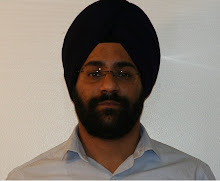
By Bradley Burston
I never thought I'd be rooting for Iran.
I am in awe of the courage of the people of Iran.
They are giving the world hope. They are teaching a shocking lesson about truth. They embody freedom. And, perhaps hardest to grasp, for those of us who live in the Middle East, they are putting their very lives on the line not for the sake of some ferociously sectarian End of Days, but for the most profoundly radical notion of all ? a better life.
Every person who has taken to the streets to demand what their government promised them, free and fair elections, did so knowing that police or secret police could arrest them, act to cripple their careers, or outright gun them down.
When the national soccer team, the sporting love of Mahmoud Ahmadinejad's life, took the field in Seoul, and when Iranian state television showed the team captain and most of the squad wearing wrist and arm bands in the green of the reformists, the players knew that there was much more at stake ? at risk ? for them personally, than whether they would defeat South Korea and advance to a place in the World Cup. The game ended in a 1-1 tie. Iran's fervent hopes of appearing in the quadrennial tournament were all but dashed. But the team had already clinched a victory of momentous proportion. They are quiet lions. They are, in every sense of the word, champions.
I never thought I'd be rooting for Iran. But I'm pulling for them now, hard as I can.
Don't get me wrong. I never swallowed the neo-con view of Tehran as the Great Satan. I didn't take Ahmadinejad's cataclysm threats at face value. I never even quite trusted the sincerity of his anti-Semitism. It seemed, in his hands, like just one more rabble-pandering tool in the kit.
This is, after all, the Middle East, where straight truth is routinely bent around corners to fit, mask, or skirt inconvenient realities.
Still, I have to get used to this. For years I watched the Islamic Republic in the stern public face that the ayatollahs themselves carefully nurtured. It was said that the founding Supreme Leader, Ayatollah Ruhollah Khomeni, never allowed himself to be photographed while smiling. More recently, vexed by the ease and the smugness of Ahmadinejad's Jew-hate, I came to view them as a brilliantly well-adapted enemy. While it seemed to me that the odds were against a down spiral and an Israeli-Iranian exchange of ballistic missiles, the word "erase," when used publicly against another country, becomes hard for the mind located in that country to, well, erase.
In trying to view the Israel-Iran stand-off with equanimity, an official policy of Holocaust denial was little help. Every time I opened the door of the bomb shelter in our basement, I could see Ahmadinejad's grin in the darkness.
Now, though, the people in Tehran's streets have made it possible to begin to see past Ahmadinejad. I have to get used to Iran not as a cartoon bully, but as my neighbor. Not because they will go nuclear ? though nuclear they may well go. But because it is a nation of people, as we are, not pawns in an increasingly obsolete revolution.
It often seems that fundamentalism is the curse of the Middle East. In Israel, in Palestine, in Lebanon, in Iraq and Iran, it appears at first glance that it is fundamentalism that keeps peace at bay, that it has cursed Israel with settlements and faith-based racism, that it has cursed the Palestinians with anti-Jewish incitement and dated ideology which has kept statehood a practical impossibility, that it makes Hezbollah worship weaponry over all else, and has spurred brother Muslims, Shi'ites and Sunnis in Iraq, to suicide bomb each other's mosques, and each other.
But this view is too simple. It fails to take into account the fact that it is not religion per se, but its unholy marriage with politics, that yields the excesses that rob people of their freedom, dignity, and a future of peace. When fundamentalism becomes revolution, the truth that is in religion, becomes the first casualty.
And make no mistake. We are all revolutionaries here. And when everyone is a member of one revolution or another, the struggles are bound to collide. In Israel alone, the founding rival revolutions (socialist Zionism versus right-wing Revisionism) which have succumbed to age and irrelevance, have been replaced by the deadlock between the settler/no compromise revolution on the one hand, and the software/global-outlook two-state revolutionaries of the new center. The Palestinians have a similar dichotomy, with the aging onetime-Marxists of Fatah battling the middle-aging Armani Islamists of Hamas.
In the wider Middle Eastern theater, the fundamentalist revolution of neo-conservatism clashed with ? and thus fueled ? the various rival revolutions of Islamism.
The saving grace, for this reason, may be the circumstance that for all their talk of permanency and messianic solutions, revolutions, like the people who run them, age. At some point, when they no longer serve their stated goals, or their people, they begin to die.
Enter, at this point, the world revolutionary named Barack Obama. The revolution he has declared is one that has resonated here with telling effect. Perhaps because it explicitly values quality of life over confrontation, peoplehood over dogma.
When Obama ran a campaign on a platform of change, few expected that, after carrying 28 states and the District of Columbia, he would carry Lebanon as well. Iran may be next. Where do we fit in? Israel and Palestine may take time. They are tough territory for moderates. And revolutionaries do not relinquish their struggles easily. But if recent events are any measure, Obama is not just any moderate.
In the meanwhile, let us return the favor of the people of Iran, and offer our hopes.
It is time for us to wear the green.

Thursday, June 18, 2009

Tuesday, May 19, 2009
Isaac Asimov's "Three Laws of Robotics."
When people talk about robots and ethics, they always seem to bring up Isaac Asimov's "Three Laws of Robotics."
But there are three major problems with these laws and their use in our real world.
The Laws
Asimov's laws initially entailed three guidelines for machines:
• Law One - "A robot may not injure a human being or, through inaction, allow a human being to come to harm."
• Law Two - "A robot must obey orders given to it by human beings except where such orders would conflict with the First Law."
• Law Three - "A robot must protect its own existence, as long as such protection does not conflict with the First or Second Law."
• Asimov later added the "Zeroth Law," above all the others - "A robot may not harm humanity, or, by inaction, allow humanity to come to harm."
The Debunk
The first problem is that the laws are fiction! They are a plot device that Asimov made up to help drive his stories. Even more, his tales almost always revolved around how robots might follow these great sounding, logical ethical codes, but still go astray and the unintended consequences that result. An advertisement for the 2004 movie adaptation of Asimov's famous book I, Robot (starring the Fresh Prince and Tom Brady's baby mama) put it best, "Rules were made to be broken."
For example, in one of Asimov's stories, robots are made to follow the laws, but they are given a certain meaning of "human." Prefiguring what now goes on in real-world ethnic cleansing campaigns, the robots only recognize people of a certain group as "human." They follow the laws, but still carry out genocide.
The second problem is that no technology can yet replicate Asimov's laws inside a machine. As Rodney Brooks of the company iRobot—named after the Asimov book, they are the people who brought you the Packbot military robot and the Roomba robot vacuum cleaner—puts it, "People ask me about whether our robots follow Asimov's laws. There is a simple reason [they don't]: I can't build Asimov's laws in them."
Roboticist Daniel Wilson [and "Machines Behaving Deadly" contributor here at Gizmodo] was a bit more florid. "Asimov's rules are neat, but they are also bullshit. For example, they are in English. How the heck do you program that?"
The most important reason for Asimov's Laws not being applied yet is how robots are being used in our real world. You don't arm a Reaper drone with a Hellfire missile or put a machine gun on a MAARS (Modular Advanced Armed Robotic System) not to cause humans to come to harm. That is the very point!
The same goes to building a robot that takes order from any human. Do I really want Osama Bin Laden to be able to order about my robot? And finally, the fact that robots can be sent out on dangerous missions to be "killed" is often the very rationale to using them. To give them a sense of "existence" and survival instinct would go against that rationale, as well as opens up potential scenarios from another science fiction series, the Terminator movies. The point here is that much of the funding for robotic research comes from the military, which is paying for robots that follow the very opposite of Asimov's laws. It explicitly wants robots that can kill, won't take orders from just any human, and don't care about their own existences.
A Question of Ethics
The bigger issue, though, when it comes to robots and ethics is not whether we can use something like Asimov's laws to make machines that are moral (which may be an inherent contradiction, given that morality wraps together both intent and action, not mere programming).
Rather, we need to start wrestling with the ethics of the people behind the machines. Where is the code of ethics in the robotics field for what gets built and what doesn't? To what would a young roboticists turn to? Who gets to use these sophisticated systems and who doesn't? Is a Predator drone a technology that should just be limited to the military? Well, too late, the Department of Homeland Security is already flying six Predator drones doing border security. Likewise, many local police departments are exploring the purchase of their own drones to park over him crime neighborhoods. I may think that makes sense, until the drone is watching my neighborhood. But what about me? Is it within my 2nd Amendment right to have a robot that bears arms?
These all sound a bit like the sort of questions that would only be posed at science fiction conventions. But that is my point. When we talk about robots now, we are no longer talking about "mere science fiction" as one Pentagon analyst described of these technologies. They are very much a part of our real world.
Friday, May 15, 2009
What Is a Man?
A man carries cash. A man looks out for those around him — woman, friend, stranger. A man can cook eggs. A man can always find something good to watch on television. A man makes things — a rock wall, a table, the tuition money. Or he rebuilds — engines, watches, fortunes. He passes along expertise, one man to the next. Know-how survives him. This is immortality. A man can speak to dogs. A man fantasizes that kung fu lives deep inside him somewhere. A man knows how to sneak a look at cleavage and doesn't care if he gets busted once in a while. A man is good at his job. Not his work, not his avocation, not his hobby. Not his career. His job. It doesn't matter what his job is, because if a man doesn't like his job, he gets a new one.
A man can look you up and down and figure some things out. Before you say a word, he makes you. From your suitcase, from your watch, from your posture. A man infers.
A man owns up. That's why Mark McGwire is not a man. A man grasps his mistakes. He lays claim to who he is, and what he was, whether he likes them or not.
Some mistakes, though, he lets pass if no one notices. Like dropping the steak in the dirt.
A man loves the human body, the revelation of nakedness. He loves the sight of the pale breast, the physics of the human skeleton, the alternating current of the flesh. He is thrilled by the snatch, by the wrist, the sight of a bare shoulder. He likes the crease of a bent knee. When his woman bends to pick up her underwear, he feels that thrum that only a man can feel.
A man doesn't point out that he did the dishes.
A man looks out for children. Makes them stand behind him.
A man knows how to bust balls.
A man has had liquor enough in his life that he can order a drink without sounding breathless, clueless, or obtuse. When he doesn't want to think, he orders bourbon or something on tap.
Never the sauvignon blanc.
A man welcomes the coming of age. It frees him. It allows him to assume the upper hand and teaches him when to step aside.
Maybe he never has, and maybe he never will, but a man figures he can knock someone, somewhere, on his ass.
He does not rely on rationalizations or explanations. He doesn't winnow, winnow, winnow until truths can be humbly categorized, or intellectualized, until behavior can be written off with an explanation. He doesn't see himself lost in some great maw of humanity, some grand sweep. That's the liberal thread; it's why men won't line up as liberals.
A man gets the door. Without thinking.
He stops traffic when he must.
A man resists formulations, questions belief, embraces ambiguity without making a fetish out of it. A man revisits his beliefs. Continually. That's why men won't forever line up with conservatives, either.
A man knows his tools and how to use them — just the ones he needs. Knows which saw is for what, how to find the stud, when to use galvanized nails.
A miter saw, incidentally, is the kind that sits on a table, has a circular blade, and is used for cutting at precise angles. Very satisfying saw.
A man knows how to lose an afternoon. Drinking, playing Grand Theft Auto, driving aimlessly, shooting pool.
He knows how to lose a month, also.
A man listens, and that's how he argues. He crafts opinions. He can pound the table, take the floor. It's not that he must. It's that he can.
A man is comfortable being alone. Loves being alone, actually. He sleeps.
Or he stands watch. He interrupts trouble. This is the state policeman. This is the poet. Men, both of them.
A man loves driving alone most of all.
Style — a man has that. No matter how eccentric that style is, it is uncontrived. It's a set of rules.
He understands the basic mechanics of the planet. Or he can close one eye, look up at the sun, and tell you what time of day it is. Or where north is. He can tell you where you might find something to eat or where the fish run. He understands electricity or the internal-combustion engine, the mechanics of flight or how to figure a pitcher's ERA.
A man does not know everything. He doesn't try. He likes what other men know.
By Tom Chiarella
A man can tell you he was wrong. That he did wrong. That he planned to. He can tell you when he is lost. He can apologize, even if sometimes it's just to put an end to the bickering.
A man does not wither at the thought of dancing. But it is generally to be avoided.
A man watches. Sometimes he goes and sits at an auction knowing he won't spend a dime, witnessing the temptation and the maneuvering of others. Sometimes he stands on the street corner watching stuff. This is not about quietude so much as collection. It is not about meditation so much as considering. A man refracts his vision and gains acuity. This serves him in every way. No one taught him this — to be quiet, to cipher, to watch. In this way, in these moments, the man is like a zoo animal: both captive and free. You cannot take your eyes off a man when he is like that. You shouldn't. The hell if you know what he is thinking, who he is, or what he will do next.
A man can look you up and down and figure some things out. Before you say a word, he makes you. From your suitcase, from your watch, from your posture. A man infers.
A man owns up. That's why Mark McGwire is not a man. A man grasps his mistakes. He lays claim to who he is, and what he was, whether he likes them or not.
Some mistakes, though, he lets pass if no one notices. Like dropping the steak in the dirt.
A man loves the human body, the revelation of nakedness. He loves the sight of the pale breast, the physics of the human skeleton, the alternating current of the flesh. He is thrilled by the snatch, by the wrist, the sight of a bare shoulder. He likes the crease of a bent knee. When his woman bends to pick up her underwear, he feels that thrum that only a man can feel.
A man doesn't point out that he did the dishes.
A man looks out for children. Makes them stand behind him.
A man knows how to bust balls.
A man has had liquor enough in his life that he can order a drink without sounding breathless, clueless, or obtuse. When he doesn't want to think, he orders bourbon or something on tap.
Never the sauvignon blanc.
A man welcomes the coming of age. It frees him. It allows him to assume the upper hand and teaches him when to step aside.
Maybe he never has, and maybe he never will, but a man figures he can knock someone, somewhere, on his ass.
He does not rely on rationalizations or explanations. He doesn't winnow, winnow, winnow until truths can be humbly categorized, or intellectualized, until behavior can be written off with an explanation. He doesn't see himself lost in some great maw of humanity, some grand sweep. That's the liberal thread; it's why men won't line up as liberals.
A man gets the door. Without thinking.
He stops traffic when he must.
A man resists formulations, questions belief, embraces ambiguity without making a fetish out of it. A man revisits his beliefs. Continually. That's why men won't forever line up with conservatives, either.
A man knows his tools and how to use them — just the ones he needs. Knows which saw is for what, how to find the stud, when to use galvanized nails.
A miter saw, incidentally, is the kind that sits on a table, has a circular blade, and is used for cutting at precise angles. Very satisfying saw.
A man knows how to lose an afternoon. Drinking, playing Grand Theft Auto, driving aimlessly, shooting pool.
He knows how to lose a month, also.
A man listens, and that's how he argues. He crafts opinions. He can pound the table, take the floor. It's not that he must. It's that he can.
A man is comfortable being alone. Loves being alone, actually. He sleeps.
Or he stands watch. He interrupts trouble. This is the state policeman. This is the poet. Men, both of them.
A man loves driving alone most of all.
Style — a man has that. No matter how eccentric that style is, it is uncontrived. It's a set of rules.
He understands the basic mechanics of the planet. Or he can close one eye, look up at the sun, and tell you what time of day it is. Or where north is. He can tell you where you might find something to eat or where the fish run. He understands electricity or the internal-combustion engine, the mechanics of flight or how to figure a pitcher's ERA.
A man does not know everything. He doesn't try. He likes what other men know.
By Tom Chiarella
A man can tell you he was wrong. That he did wrong. That he planned to. He can tell you when he is lost. He can apologize, even if sometimes it's just to put an end to the bickering.
A man does not wither at the thought of dancing. But it is generally to be avoided.
A man watches. Sometimes he goes and sits at an auction knowing he won't spend a dime, witnessing the temptation and the maneuvering of others. Sometimes he stands on the street corner watching stuff. This is not about quietude so much as collection. It is not about meditation so much as considering. A man refracts his vision and gains acuity. This serves him in every way. No one taught him this — to be quiet, to cipher, to watch. In this way, in these moments, the man is like a zoo animal: both captive and free. You cannot take your eyes off a man when he is like that. You shouldn't. The hell if you know what he is thinking, who he is, or what he will do next.
Sunday, May 10, 2009
Pouring my heart out - To do or not to do...
Lately I have received a request that I pour my thoughts and heart out on the blog. Going by my past experience it does not seems like a good idea, yet the premise behind this latest request is one which cannot be easily dismissed.
The request stems from my perceived (and frankly actual) inability to close a particular deal. The basic idea behind the this request is noble, nobler still is the potential outcome, but the path well that's far from noble and that holds me back from actually going ahead and making public what has so far remained in the private.
How long will this insistence on the nobility of the means last? Frankly I do not know. There may come a time when all high principles of nobility and honor have to be sacrificed on the alter of life for the ultimate realization of the life's meaning (ironic isn't it). Hopefully that time may never come and I may just be able to realize the life's meaning without having to make the choice. Maybe the gods will be kind enough to let me have my way.
The request stems from my perceived (and frankly actual) inability to close a particular deal. The basic idea behind the this request is noble, nobler still is the potential outcome, but the path well that's far from noble and that holds me back from actually going ahead and making public what has so far remained in the private.
How long will this insistence on the nobility of the means last? Frankly I do not know. There may come a time when all high principles of nobility and honor have to be sacrificed on the alter of life for the ultimate realization of the life's meaning (ironic isn't it). Hopefully that time may never come and I may just be able to realize the life's meaning without having to make the choice. Maybe the gods will be kind enough to let me have my way.
Sunday, April 26, 2009
An open letter to Gen Kayani
View from the other side Col (r) Harish Puri
Tuesday, April 14, 2009
Dear Gen Kayani,
Sir, let me begin by recounting that old army quip that did the rounds in the immediate aftermath of World war II: To guarantee victory, an army should ideally have German generals, British officers, Indian soldiers, American equipment and Italian enemies.
A Pakistani soldier that I met in Iraq in 2004 lamented the fact that the Pakistani soldier in Kargil had been badly let down firstly by Nawaz Sharif and then by the Pakistani officers' cadre. Pakistani soldiers led by Indian officers, , he believed, would be the most fearsome combination possible. Pakistani officers, he went on to say, were more into real estate, defence housing colonies and the like.
As I look at two photographs of surrender that lie before me, I can't help recalling his words. The first is the celebrated event at Dhaka on Dec 16, 1971, which now adorns most Army messes in Delhi and Calcutta. The second, sir, is the video of a teenage girl being flogged by the Taliban in Swat -- not far, I am sure, from one of your Army check posts.
The surrender by any Army is always a sad and humiliating event. Gen Niazi surrendered in Dhaka to a professional army that had outnumbered and outfought him. No Pakistani has been able to get over that humiliation, and 16th December is remembered as a black day by the Pakistani Army and the Pakistani state. But battles are won and lost – armies know this, and having learnt their lessons, they move on.
But much more sadly, the video of the teenager being flogged represents an even more abject surrender by the Pakistani Army. The surrender in 1971, though humiliating, was not disgraceful. This time around, sir, what happened on your watch was something no Army commander should have to live through. The girl could have been your own daughter, or mine.
I have always maintained that the Pakistani Army, like its Indian counterpart, is a thoroughly professional outfit. It has fought valiantly in the three wars against India, and also accredited itself well in its UN missions abroad. It is, therefore, by no means a pushover. The instance of an Infantry unit, led by a lieutenant colonel, meekly laying down arms before 20-odd militants should have been an aberration. But this capitulation in Swat, that too so soon after your own visit to the area, is an assault on the sensibilities of any soldier. What did you tell your soldiers? What great inspirational speech did you make that made your troops back off without a murmur? Sir, I have fought insurgency in Kashmir as well as the North-East, but despite the occasional losses suffered (as is bound to be the case in counter-insurgency operations), such total surrender is unthinkable.
I have been a signaller, and it beats me how my counterparts in your Signal Corps could not locate or even jam a normal FM radio station broadcasting on a fixed frequency at fixed timings. Is there more than meets the eye?
I am told that it is difficult for your troops to "fight their own people." But you never had that problem in East Pakistan in 1971, where the atrocities committed by your own troops are well documented in the Hamoodur Rahman Commission Report. Or is it that the Bengalis were never considered "your own" people, influenced as they were by the Hindus across the border? Or is that your troops are terrified by the ruthless barbarians of the Taliban?
Sir, it is imperative that we recognise our enemy without any delay. I use the word "our" advisedly – for the Taliban threat is not far from India's borders. And the only force that can stop them from dragging Pakistan back into the Stone Age is the force that you command. In this historic moment, providence has placed a tremendous responsibility in your hands. Indeed, the fate of your nation, the future of humankind in the subcontinent rests with you. It doesn't matter if it is "my war" or "your war" – it is a war that has to be won. A desperate Swati citizen's desperate lament says it all – "Please drop an atom bomb on us and put us out of our misery!" Do not fail him, sir.
But in the gloom and the ignominy, the average Pakistani citizen has shown us that there is hope yet. The lawyers, the media, have all refused to buckle even under direct threats. It took the Taliban no less than 32 bullets to still the voice of a brave journalist. Yes, there is hope – but why don't we hear the same language from you? Look to these brave hearts, sir – and maybe we shall see the tide turn. Our prayers are with you, and the hapless people of Swat.
The New York Times predicts that Pakistan will collapse in six months. Do you want to go down in history as the man who allowed that to happen?
Tuesday, April 14, 2009
Dear Gen Kayani,
Sir, let me begin by recounting that old army quip that did the rounds in the immediate aftermath of World war II: To guarantee victory, an army should ideally have German generals, British officers, Indian soldiers, American equipment and Italian enemies.
A Pakistani soldier that I met in Iraq in 2004 lamented the fact that the Pakistani soldier in Kargil had been badly let down firstly by Nawaz Sharif and then by the Pakistani officers' cadre. Pakistani soldiers led by Indian officers, , he believed, would be the most fearsome combination possible. Pakistani officers, he went on to say, were more into real estate, defence housing colonies and the like.
As I look at two photographs of surrender that lie before me, I can't help recalling his words. The first is the celebrated event at Dhaka on Dec 16, 1971, which now adorns most Army messes in Delhi and Calcutta. The second, sir, is the video of a teenage girl being flogged by the Taliban in Swat -- not far, I am sure, from one of your Army check posts.
The surrender by any Army is always a sad and humiliating event. Gen Niazi surrendered in Dhaka to a professional army that had outnumbered and outfought him. No Pakistani has been able to get over that humiliation, and 16th December is remembered as a black day by the Pakistani Army and the Pakistani state. But battles are won and lost – armies know this, and having learnt their lessons, they move on.
But much more sadly, the video of the teenager being flogged represents an even more abject surrender by the Pakistani Army. The surrender in 1971, though humiliating, was not disgraceful. This time around, sir, what happened on your watch was something no Army commander should have to live through. The girl could have been your own daughter, or mine.
I have always maintained that the Pakistani Army, like its Indian counterpart, is a thoroughly professional outfit. It has fought valiantly in the three wars against India, and also accredited itself well in its UN missions abroad. It is, therefore, by no means a pushover. The instance of an Infantry unit, led by a lieutenant colonel, meekly laying down arms before 20-odd militants should have been an aberration. But this capitulation in Swat, that too so soon after your own visit to the area, is an assault on the sensibilities of any soldier. What did you tell your soldiers? What great inspirational speech did you make that made your troops back off without a murmur? Sir, I have fought insurgency in Kashmir as well as the North-East, but despite the occasional losses suffered (as is bound to be the case in counter-insurgency operations), such total surrender is unthinkable.
I have been a signaller, and it beats me how my counterparts in your Signal Corps could not locate or even jam a normal FM radio station broadcasting on a fixed frequency at fixed timings. Is there more than meets the eye?
I am told that it is difficult for your troops to "fight their own people." But you never had that problem in East Pakistan in 1971, where the atrocities committed by your own troops are well documented in the Hamoodur Rahman Commission Report. Or is it that the Bengalis were never considered "your own" people, influenced as they were by the Hindus across the border? Or is that your troops are terrified by the ruthless barbarians of the Taliban?
Sir, it is imperative that we recognise our enemy without any delay. I use the word "our" advisedly – for the Taliban threat is not far from India's borders. And the only force that can stop them from dragging Pakistan back into the Stone Age is the force that you command. In this historic moment, providence has placed a tremendous responsibility in your hands. Indeed, the fate of your nation, the future of humankind in the subcontinent rests with you. It doesn't matter if it is "my war" or "your war" – it is a war that has to be won. A desperate Swati citizen's desperate lament says it all – "Please drop an atom bomb on us and put us out of our misery!" Do not fail him, sir.
But in the gloom and the ignominy, the average Pakistani citizen has shown us that there is hope yet. The lawyers, the media, have all refused to buckle even under direct threats. It took the Taliban no less than 32 bullets to still the voice of a brave journalist. Yes, there is hope – but why don't we hear the same language from you? Look to these brave hearts, sir – and maybe we shall see the tide turn. Our prayers are with you, and the hapless people of Swat.
The New York Times predicts that Pakistan will collapse in six months. Do you want to go down in history as the man who allowed that to happen?
Saturday, February 21, 2009
A tale not of war, but honor and goodness ...
Lieutenant Colonel Michael Strobl USMC.
Chance Phelps was wearing his Saint Christopher medal when he was killed on Good Friday. Eight days later, I handed the medallion to his mother. I didn't know Chance before he died. Today, I miss him.
Over a year ago, I volunteered to escort the remains of Marines killed in Iraq should the need arise. The military provides a uniformed escort for all casualties to ensure they are delivered safely to the next of kin and are treated with dignity and respect along the way.
Thankfully, I hadn't been called on to be an escort since Operation Iraqi Freedom began. The first few weeks of April, however, had been a tough month for the Marines. On the Monday after Easter I was reviewing Department of Defense press releases when I saw that a Private First Class Chance Phelps was killed in action outside of Baghdad. The press release listed his hometown--the same town I'm from. I notified our Battalion adjutant and told him that, should the duty to escort PFC Phelps fall to our Battalion, I would take him.
I didn't hear back the rest of Monday and all day Tuesday until 1800. The Battalion duty NCO called my cell phone and said I needed to be ready to leave for Dover Air Force Base at 1900 in order to escort the remains of PFC Phelps.
Before leaving for Dover I called the major who had the task of informing Phelps's parents of his death. The major said the funeral was going to be in Dubois, Wyoming. (It turned out that PFC Phelps only lived in my hometown for his senior year of high school.) I had never been to Wyoming and had never heard of Dubois.
With two other escorts from Quantico, I got to Dover AFB at 2330 on Tuesday night. First thing on Wednesday we reported to the mortuary at the base. In the escort lounge there were about half a dozen Army soldiers and about an equal number of Marines waiting to meet up with "their" remains for departure. PFC Phelps was not ready, however, and I was told to come back on Thursday. Now, at Dover with nothing to do and a solemn mission ahead, I began to get depressed.
I was wondering about Chance Phelps. I didn't know anything about him; not even what he looked like. I wondered about his family and what it would be like to meet them. I did pushups in my room until I couldn't do any more. On Thursday morning I reported back to the mortuary. This time there was a new group of Army escorts and a couple of the Marines who had been there Wednesday. There was also an Air Force captain there to escort his brother home to San Diego.
We received a brief covering our duties, the proper handling of the remains, the procedures for draping a flag over a casket, and of course, the paperwork attendant to our task. We were shown pictures of the shipping container and told that each one contained, in addition to the casket, a flag. I was given an extra flag since Phelps's parents were divorced. This way they would each get one. I didn't like the idea of stuffing the flag into my luggage but I couldn't see carrying a large flag, folded for presentation to the next of kin, through an airport while in my Alpha uniform. It barely fit into my suitcase.
It turned out that I was the last escort to leave on Thursday. This meant that I repeatedly got to participate in the small ceremonies that mark all departures from the Dover AFB mortuary.
Most of the remains are taken from Dover AFB by hearse to the airport in Philadelphia for air transport to their final destination. When the remains of a service member are loaded onto a hearse and ready to leave the Dover mortuary, there is an announcement made over the building's intercom system. With the announcement, all service members working at the mortuary, regardless of service branch, stop work and form up along the driveway to render a slow ceremonial salute as the hearse departs.
Escorts also participated in each formation until it was their time to leave. On this day there were some civilian workers doing construction on the mortuary grounds. As each hearse passed, they would stop working and place their hard hats over their hearts. This was my first sign that my mission with PFC Phelps was larger than the Marine Corps and that his family and friends were not grieving alone.
Eventually I was the last escort remaining in the lounge. The Marine Master Gunnery Sergeant in charge of the Marine liaison there came to see me. He had Chance Phelps's personal effects. He removed each item; a large watch, a wooden cross with a lanyard, two loose dog tags, two dog tags on a chain, and a Saint Christopher medal on a silver chain. Although we had been briefed that we might be carrying some personal effects of the deceased, this set me aback. Holding his personal effects, I was starting to get to know Chance Phelps.
Finally we were ready. I grabbed my bags and went outside. I was somewhat startled when I saw the shipping container, loaded three-quarters of the way in to the back of a black Chevy Suburban that had been modified to carry such cargo. This was the first time I saw my "cargo" and I was surprised at how large the shipping container was. The Master Gunnery Sergeant and I verified that the name on the container was Phelps's then they pushed him the rest of the way in and we left. Now it was PFC Chance Phelps's turn to receive the military--and construction workers'--honors. He was finally moving towards home.
As I chatted with the driver on the hour-long trip to Philadelphia, it became clear that he considered it an honor to be able to contribute in getting Chance home. He offered his sympathy to the family. I was glad to finally be moving yet apprehensive about what things would be like at the airport. I didn't want this package to be treated like ordinary cargo, but I knew that the simple logistics of moving around a box this large would have to overrule my preferences.
When we got to the Northwest Airlines cargo terminal at the Philadelphia airport, the cargo handler and hearse driver pulled the shipping container onto a loading bay while I stood to the side and executed a slow salute.
Once Chance was safely in the cargo area, and I was satisfied that he would be treated with due care and respect, the hearse driver drove me over to the passenger terminal and dropped me off.
As I walked up to the ticketing counter in my uniform, a Northwest employee started to ask me if I knew how to use the automated boarding pass dispenser. Before she could finish another ticketing agent interrupted her.
He told me to go straight to the counter then explained to the woman that I was a military escort. She seemed embarrassed. The woman behind the counter already had tears in her eyes as I was pulling out my government travel voucher. She struggled to find words but managed to express her sympathy for the family and thank me for my service. She upgraded my ticket to first class.
After clearing security, I was met by another Northwest Airline employee at the gate. She told me a representative from cargo would be up to take me down to the tarmac to observe the movement and loading of PFC Phelps. I hadn't really told any of them what my mission was but they all knew. When the man from the cargo crew met me, he, too, struggled for words.
On the tarmac, he told me stories of his childhood as a military brat and repeatedly told me that he was sorry for my loss. I was starting to understand that, even here in Philadelphia, far away from Chance's hometown, people were mourning with his family.
On the tarmac, the cargo crew was silent except for occasional instructions to each other. I stood to the side and saluted as the conveyor moved Chance to the aircraft. I was relieved when he was finally settled into place. The rest of the bags were loaded and I watched them shut the cargo bay door before heading back up to board the aircraft.
One of the pilots had taken my carry-on bag himself and had it stored next to the cockpit door so he could watch it while I was on the tarmac. As I boarded the plane, I could tell immediately that the flight attendants had already been informed of my mission. They seemed a little choked up as they led me to my seat.
About 45 minutes into our flight I still hadn't spoken to anyone except to tell the first class flight attendant that I would prefer water. I was surprised when the flight attendant from the back of the plane suddenly appeared and leaned down to grab my hands. She said, "I want you to have this" as she pushed a small gold crucifix, with a relief of Jesus, into my hand. It was her lapel pin and it looked somewhat worn. I suspected it had been hers for quite some time. That was the only thing she said to me the entire flight.
When we landed in Minneapolis, I was the first one off the plane. The pilot himself escorted me straight down the side stairs of the exit tunnel to the tarmac. The cargo crew there already knew what was on this plane. They were unloading some of the luggage when an Army sergeant, a fellow escort who had left Dover earlier that day, appeared next to me. His "cargo" was going to be loaded onto my plane for its continuing leg. We stood side by side in the dark and executed a slow salute as Chance was removed from the plane. The cargo crew at Minneapolis kept Phelps's shipping case separate from all the other luggage as they waited to take us to the cargo area. I waited with the soldier and we saluted together as his fallen comrade was loaded onto the plane.
My trip with Chance was going to be somewhat unusual in that we were going to have an overnight stopover. We had a late start out of Dover and there was just too much traveling ahead of us to continue on that day. (We still had a flight from Minneapolis to Billings, Montana, then a five-hour drive to the funeral home. That was to be followed by a 90-minute drive to Chance's hometown.)
I was concerned about leaving him overnight in the Minneapolis cargo area. My ten-minute ride from the tarmac to the cargo holding area eased my apprehension. Just as in Philadelphia, the cargo guys in Minneapolis were extremely respectful and seemed honored to do their part. While talking with them, I learned that the cargo supervisor for Northwest Airlines at the Minneapolis airport is a Lieutenant Colonel in the Marine Corps Reserves. They called him for me and let me talk to him.
Once I was satisfied that all would be okay for the night, I asked one of the cargo crew if he would take me back to the terminal so that I could catch my hotel's shuttle. Instead, he drove me straight to the hotel himself. At the hotel, the Lieutenant Colonel called me and said he would personally pick me up in the morning and bring me back to the cargo area.
Before leaving the airport, I had told the cargo crew that I wanted to come back to the cargo area in the morning rather than go straight to the passenger terminal. I felt bad for leaving Chance overnight and wanted to see the shipping container where I had left it for the night. It was fine.
The Lieutenant Colonel made a few phone calls then drove me around to the passenger terminal. I was met again by a man from the cargo crew and escorted down to the tarmac. The pilot of the plane joined me as I waited for them to bring Chance from the cargo area. The pilot and I talked of his service in the Air Force and how he missed it.
I saluted as Chance was moved up the conveyor and onto the plane. It was to be a while before the luggage was to be loaded so the pilot took me up to the board the plane where I could watch the tarmac from a window. With no other passengers yet on board, I talked with the flight attendants and one of the cargo guys. He had been in the Navy and one of the attendants had been in the Air Force. Everywhere I went, people were continuing to tell me their relationship to the military. After all the baggage was aboard, I went back down to the tarmac, inspected the cargo bay, and watched them secure the door.
When we arrived at Billings, I was again the first off the plane. This time Chance's shipping container was the first item out of the cargo hold. The funeral director had driven five hours up from Riverton, Wyoming to meet us. He shook my hand as if I had personally lost a brother.
We moved Chance to a secluded cargo area. Now it was time for me to remove the shipping container and drape the flag over the casket. I had predicted that this would choke me up but I found I was more concerned with proper flag etiquette than the solemnity of the moment. Once the flag was in place, I stood by and saluted as Chance was loaded onto the van from the funeral home. I was thankful that we were in a small airport and the event seemed to go mostly unnoticed. I picked up my rental car and followed Chance for five hours until we reached Riverton. During the long trip I imagined how my meeting with Chance's parents would go. I was very nervous about that.
When we finally arrived at the funeral home, I had my first face to face meeting with the Casualty Assistance Call Officer. It had been his duty to inform the family of Chance's death. He was on the Inspector/Instructor staff of an infantry company in Salt Lake City, Utah and I knew he had had a difficult week.
Inside I gave the funeral director some of the paperwork from Dover and discussed the plan for the next day. The service was to be at 1400 in the high school gymnasium up in Dubois, population about 900, some 90 miles away. Eventually, we had covered everything. The CACO had some items that the family wanted to be inserted into the casket and I felt I needed to inspect Chance's uniform to ensure everything was proper. Although it was going to be a closed casket funeral, I still wanted to ensure his uniform was squared away.
Earlier in the day I wasn't sure how I'd handle this moment. Suddenly, the casket was open and I got my first look at Chance Phelps. His uniform was immaculate--a tribute to the professionalism of the Marines at Dover. I noticed that he wore six ribbons over his marksmanship badge; the senior one was his Purple Heart. I had been in the Corps for over 17 years, including a combat tour, and was wearing eight ribbons. This Private First Class, with less than a year in the Corps, had already earned six.
The next morning, I wore my dress blues and followed the hearse for the trip up to Dubois. This was the most difficult leg of our trip for me. I was bracing for the moment when I would meet his parents and hoping I would find the right words as I presented them with Chance's personal effects. We got to the high school gym about four hours before the service was to begin. The gym floor was covered with folding chairs neatly lined in rows.
There were a few townspeople making final preparations when I stood next to the hearse and saluted as Chance was moved out of the hearse. The sight of a flag-draped coffin was overwhelming to some of the ladies. We moved Chance into the gym to the place of honor. A Marine sergeant, the command representative from Chance's battalion, met me at the gym. His eyes were watery as he relieved me of watching Chance so that I could go eat lunch and find my hotel.
At the restaurant, the table had a flier announcing Chance's service. Dubois High School gym; two o' clock. It also said that the family would be accepting donations so that they could buy flak vests to send to troops in Iraq.
I drove back to the gym at a quarter after one. I could've walked--you could walk to just about anywhere in Dubois in ten minutes. I had planned to find a quiet room where I could take his things out of their pouch and untangle the chain of the Saint Christopher medal from the dog tag chains and arrange everything before his parents came in. I had twice before removed the items from the pouch to ensure they were all there--even though there was no chance anything could've fallen out. Each time, the two chains had been quite tangled. I didn't want to be fumbling around trying to untangle them in front of his parents. Our meeting, however, didn't go as expected.
I practically bumped into Chance's step-mom accidentally and our introductions began in the noisy hallway outside the gym. In short order I had met Chance's step-mom and father followed by his step-dad and, at last, his mom. I didn't know how to express to these people my sympathy for their loss and my gratitude for their sacrifice. Now, however, they were repeatedly thanking me for bringing their son home and for my service. I was humbled beyond words.
I told them that I had some of Chance's things and asked if we could try to find a quiet place. The five of us ended up in what appeared to be a computer lab--not what I had envisioned for this occasion. After we had arranged five chairs around a small table, I told them about our trip. I told them how, at every step, Chance was treated with respect, dignity, and honor. I told them about the staff at Dover and all the folks at Northwest Airlines. I tried to convey how the entire Nation, from Dover to Philadelphia, to Minneapolis, to Billings, and Riverton expressed grief and sympathy over their loss.
Finally, it was time to open the pouch. The first item I happened to pull out was Chance's large watch. It was still set to Baghdad time. Next were the lanyard and the wooden cross. Then the dog tags and the Saint Christopher medal. This time the chains were not tangled. Once all of his items were laid out on the table, I told his mom that I had one other item to give them. I retrieved the flight attendant's crucifix from my pocket and told its story. I set that on the table and excused myself. When I next saw Chance's mom, she was wearing the crucifix on her lapel.
By 1400 most of the seats on the gym floor were filled and people were finding seats in the fixed bleachers high above the gym floor. There were a surprising number of people in military uniform. Many Marines had come up from Salt Lake City. Men from various VFW posts and the Marine Corps League occupied multiple rows of folding chairs. We all stood as Chance's family took their seats in the front.
It turned out that Chance's sister, a Petty Officer in the Navy, worked for a Rear Admiral--the Chief of Naval Intelligence--at the Pentagon. The Admiral had brought many of the sailors on his staff with him to Dubois pay respects to Chance and support his sister. After a few songs and some words from a Navy Chaplain, the Admiral took the microphone and told us how Chance had died.
Chance was an artillery cannoneer and his unit was acting as provisional military police outside of Baghdad. Chance had volunteered to man a .50 caliber machine gun in the turret of the leading vehicle in a convoy. The convoy came under intense fire but Chance stayed true to his post and returned fire with the big gun, covering the rest of the convoy, until he was fatally wounded.
Then the commander of the local VFW post read some of the letters Chance had written home. In letters to his mom he talked of the mosquitoes and the heat. In letters to his stepfather he told of the dangers of convoy operations and of receiving fire.
The service was a fitting tribute to this hero. When it was over, we stood as the casket was wheeled out with the family following. The casket was placed onto a horse-drawn carriage for the mile-long trip from the gym, down the main street, then up the steep hill to the cemetery. I stood alone and saluted as the carriage departed the high school. I found my car and joined Chance's convoy.
The town seemingly went from the gym to the street. All along the route, the people had lined the street and were waving small American flags. The flags that were otherwise posted were all at half-staff. For the last quarter mile up the hill, local boy scouts, spaced about 20 feet apart, all in uniform, held large flags. At the foot of the hill, I could look up and back and see the enormity of our procession. I wondered how many people would be at this funeral if it were in, say, Detroit or Los Angeles--probably not as many as were here in little Dubois, Wyoming.
The carriage stopped about 15 yards from the grave and the military pall bearers and the family waited until the men of the VFW and Marine Corps league were formed up and school busses had arrived carrying many of the people from the procession route. Once the entire crowd was in place, the pallbearers came to attention and began to remove the casket from the caisson. As I had done all week, I came to attention and executed a slow ceremonial salute as Chance was being transferred from one mode of transport to another.
From Dover to Philadelphia; Philadelphia to Minneapolis; Minneapolis to Billings; Billings to Riverton; and Riverton to Dubois we had been together. Now, as I watched them carry him the final 15 yards, I was choking up. I felt that, as long as he was still moving, he was somehow still alive. Then they put him down above his grave. He had stopped moving.
Although my mission had been officially complete once I turned him over to the funeral director at the Billings airport, it was his placement at his grave that really concluded it in my mind. Now, he was home to stay and I suddenly felt at once sad, relieved, and useless.
The chaplain said some words that I couldn't hear and two Marines removed the flag from the casket and slowly folded it for presentation to his mother. When the ceremony was over, Chance's father placed a ribbon from his service in Vietnam on Chance's casket. His mother approached the casket and took something from her blouse and put it on the casket. I later saw that it was the flight attendant's crucifix. Eventually friends of Chance's moved closer to the grave. A young man put a can of Copenhagen on the casket and many others left flowers.
Finally, we all went back to the gym for a reception. There was enough food to feed the entire population for a few days. In one corner of the gym there was a table set up with lots of pictures of Chance and some of his sports awards. People were continually approaching me and the other Marines to thank us for our service. Almost all of them had some story to tell about their connection to the military. About an hour into the reception, I had the impression that every man in Wyoming had, at one time or another, been in the service.
It seemed like every time I saw Chance's mom she was hugging a different well wisher. As time passed, I began to hear people laughing. We were starting to heal.
After a few hours at the gym, I went back to the hotel to change out of my dress blues. The local VFW post had invited everyone over to "celebrate Chance's life." The Post was on the other end of town from my hotel and the drive took less than two minutes. The crowd was somewhat smaller than what had been at the gym but the Post was packed.
Marines were playing pool at the two tables near the entrance and most of the VFW members were at the bar or around the tables in the bar area. The largest room in the Post was a banquet/dinning/dancing area and it was now called "The Chance Phelps Room." Above the entry were two items: a large portrait of Chance in his dress blues and the Eagle, Globe, & Anchor. In one corner of the room there was another memorial to Chance. There were candles burning around another picture of him in his blues. On the table surrounding his photo were his Purple Heart citation and his Purple Heart medal. There was also a framed copy of an excerpt from the Congressional Record. This was an elegant tribute to Chance Phelps delivered on the floor of the United States House of Representatives by Congressman Scott McInnis of Colorado. Above it all was a television that was playing a photo montage of Chance's life from small boy to proud Marine.
I did not buy a drink that night. As had been happening all day, indeed all week, people were thanking me for my service and for bringing Chance home. Now, in addition to words and handshakes, they were thanking me with beer. I fell in with the men who had handled the horses and horse-drawn carriage. I learned that they had worked through the night to groom and prepare the horses for Chance's last ride. They were all very grateful that they were able to contribute.
After a while we all gathered in the Chance Phelps room for the formal dedication. The Post commander told us of how Chance had been so looking forward to becoming a Life Member of the VFW. Now, in the Chance Phelps Room of the Dubois, Wyoming post, he would be an eternal member. We all raised our beers and the Chance Phelps room was christened.
Later, as I was walking toward the pool tables, a Staff Sergeant from the Reserve unit in Salt Lake grabbed me and said, "Sir, you gotta hear this." There were two other Marines with him and he told the younger one, a Lance Corporal, to tell me his story. The Staff Sergeant said the Lance Corporal was normally too shy and modest to tell it but now he'd had enough beer to overcome his usual tendencies.
As the Lance Corporal started to talk, an older man joined our circle. He wore a baseball cap that indicated he had been with the 1st Marine Division in Korea. Earlier in the evening he had told me about one of his former commanding officers; a Colonel Puller.
So, there I was, standing in a circle with three Marines recently returned from fighting with the 1st Marine Division in Iraq and one not so recently returned from fighting with the 1st Marine Division in Korea. I, who had fought with the 1st Marine Division in Kuwait, was about to gain a new insight into our Corps.
The young Lance Corporal began to tell us his story. At that moment, in this circle of current and former Marines, the differences in our ages and ranks dissipated--we were all simply Marines.
His squad had been on a patrol through a city street. They had taken small arms fire and had literally dodged an RPG round that sailed between two Marines. At one point they received fire from behind a wall and had neutralized the sniper with a SMAW round. The back blast of the SMAW, however, kicked up a substantial rock that hammered the Lance Corporal in the thigh; only missing his groin because he had reflexively turned his body sideways at the shot.
Their squad had suffered some wounded and was receiving more sniper fire when suddenly he was hit in the head by an AK-47 round. I was stunned as he told us how he felt like a baseball bat had been slammed into his head. He had spun around and fell unconscious. When he came to, he had a severe scalp wound but his Kevlar helmet had saved his life. He continued with his unit for a few days before realizing he was suffering the effects of a severe concussion.
As I stood there in the circle with the old man and the other Marines, the Staff Sergeant finished the story. He told of how this Lance Corporal had begged and pleaded with the Battalion surgeon to let him stay with his unit. In the end, the doctor said there was just no way--he had suffered a severe and traumatic head wound and would have to be med'evaced.
The Marine Corps is a special fraternity. There are moments when we are reminded of this. Interestingly, those moments don't always happen at awards ceremonies or in dress blues at Birthday Balls. I have found, rather, that they occur at unexpected times and places: next to a loaded moving van at Camp Lejeune's base housing, in a dirty CP tent in northern Saudi Arabia, and in a smoky VFW post in western Wyoming.
After the story was done, the Lance Corporal stepped over to the old man, put his arm over the man's shoulder and told him that he, the Korean War vet, was his hero. The two of them stood there with their arms over each other's shoulders and we were all silent for a moment. When they let go, I told the Lance Corporal that there were recruits down on the yellow footprints tonight that would soon be learning his story.
I was finished drinking beer and telling stories. I found Chance's father and shook his hand one more time. Chance's mom had already left and I deeply regretted not being able to tell her goodbye.
I left Dubois in the morning before sunrise for my long drive back to Billings. It had been my honor to take Chance Phelps to his final post. Now he is on the high ground overlooking his town.
I miss him.
Chance Phelps was wearing his Saint Christopher medal when he was killed on Good Friday. Eight days later, I handed the medallion to his mother. I didn't know Chance before he died. Today, I miss him.
Over a year ago, I volunteered to escort the remains of Marines killed in Iraq should the need arise. The military provides a uniformed escort for all casualties to ensure they are delivered safely to the next of kin and are treated with dignity and respect along the way.
Thankfully, I hadn't been called on to be an escort since Operation Iraqi Freedom began. The first few weeks of April, however, had been a tough month for the Marines. On the Monday after Easter I was reviewing Department of Defense press releases when I saw that a Private First Class Chance Phelps was killed in action outside of Baghdad. The press release listed his hometown--the same town I'm from. I notified our Battalion adjutant and told him that, should the duty to escort PFC Phelps fall to our Battalion, I would take him.
I didn't hear back the rest of Monday and all day Tuesday until 1800. The Battalion duty NCO called my cell phone and said I needed to be ready to leave for Dover Air Force Base at 1900 in order to escort the remains of PFC Phelps.
Before leaving for Dover I called the major who had the task of informing Phelps's parents of his death. The major said the funeral was going to be in Dubois, Wyoming. (It turned out that PFC Phelps only lived in my hometown for his senior year of high school.) I had never been to Wyoming and had never heard of Dubois.
With two other escorts from Quantico, I got to Dover AFB at 2330 on Tuesday night. First thing on Wednesday we reported to the mortuary at the base. In the escort lounge there were about half a dozen Army soldiers and about an equal number of Marines waiting to meet up with "their" remains for departure. PFC Phelps was not ready, however, and I was told to come back on Thursday. Now, at Dover with nothing to do and a solemn mission ahead, I began to get depressed.
I was wondering about Chance Phelps. I didn't know anything about him; not even what he looked like. I wondered about his family and what it would be like to meet them. I did pushups in my room until I couldn't do any more. On Thursday morning I reported back to the mortuary. This time there was a new group of Army escorts and a couple of the Marines who had been there Wednesday. There was also an Air Force captain there to escort his brother home to San Diego.
We received a brief covering our duties, the proper handling of the remains, the procedures for draping a flag over a casket, and of course, the paperwork attendant to our task. We were shown pictures of the shipping container and told that each one contained, in addition to the casket, a flag. I was given an extra flag since Phelps's parents were divorced. This way they would each get one. I didn't like the idea of stuffing the flag into my luggage but I couldn't see carrying a large flag, folded for presentation to the next of kin, through an airport while in my Alpha uniform. It barely fit into my suitcase.
It turned out that I was the last escort to leave on Thursday. This meant that I repeatedly got to participate in the small ceremonies that mark all departures from the Dover AFB mortuary.
Most of the remains are taken from Dover AFB by hearse to the airport in Philadelphia for air transport to their final destination. When the remains of a service member are loaded onto a hearse and ready to leave the Dover mortuary, there is an announcement made over the building's intercom system. With the announcement, all service members working at the mortuary, regardless of service branch, stop work and form up along the driveway to render a slow ceremonial salute as the hearse departs.
Escorts also participated in each formation until it was their time to leave. On this day there were some civilian workers doing construction on the mortuary grounds. As each hearse passed, they would stop working and place their hard hats over their hearts. This was my first sign that my mission with PFC Phelps was larger than the Marine Corps and that his family and friends were not grieving alone.
Eventually I was the last escort remaining in the lounge. The Marine Master Gunnery Sergeant in charge of the Marine liaison there came to see me. He had Chance Phelps's personal effects. He removed each item; a large watch, a wooden cross with a lanyard, two loose dog tags, two dog tags on a chain, and a Saint Christopher medal on a silver chain. Although we had been briefed that we might be carrying some personal effects of the deceased, this set me aback. Holding his personal effects, I was starting to get to know Chance Phelps.
Finally we were ready. I grabbed my bags and went outside. I was somewhat startled when I saw the shipping container, loaded three-quarters of the way in to the back of a black Chevy Suburban that had been modified to carry such cargo. This was the first time I saw my "cargo" and I was surprised at how large the shipping container was. The Master Gunnery Sergeant and I verified that the name on the container was Phelps's then they pushed him the rest of the way in and we left. Now it was PFC Chance Phelps's turn to receive the military--and construction workers'--honors. He was finally moving towards home.
As I chatted with the driver on the hour-long trip to Philadelphia, it became clear that he considered it an honor to be able to contribute in getting Chance home. He offered his sympathy to the family. I was glad to finally be moving yet apprehensive about what things would be like at the airport. I didn't want this package to be treated like ordinary cargo, but I knew that the simple logistics of moving around a box this large would have to overrule my preferences.
When we got to the Northwest Airlines cargo terminal at the Philadelphia airport, the cargo handler and hearse driver pulled the shipping container onto a loading bay while I stood to the side and executed a slow salute.
Once Chance was safely in the cargo area, and I was satisfied that he would be treated with due care and respect, the hearse driver drove me over to the passenger terminal and dropped me off.
As I walked up to the ticketing counter in my uniform, a Northwest employee started to ask me if I knew how to use the automated boarding pass dispenser. Before she could finish another ticketing agent interrupted her.
He told me to go straight to the counter then explained to the woman that I was a military escort. She seemed embarrassed. The woman behind the counter already had tears in her eyes as I was pulling out my government travel voucher. She struggled to find words but managed to express her sympathy for the family and thank me for my service. She upgraded my ticket to first class.
After clearing security, I was met by another Northwest Airline employee at the gate. She told me a representative from cargo would be up to take me down to the tarmac to observe the movement and loading of PFC Phelps. I hadn't really told any of them what my mission was but they all knew. When the man from the cargo crew met me, he, too, struggled for words.
On the tarmac, he told me stories of his childhood as a military brat and repeatedly told me that he was sorry for my loss. I was starting to understand that, even here in Philadelphia, far away from Chance's hometown, people were mourning with his family.
On the tarmac, the cargo crew was silent except for occasional instructions to each other. I stood to the side and saluted as the conveyor moved Chance to the aircraft. I was relieved when he was finally settled into place. The rest of the bags were loaded and I watched them shut the cargo bay door before heading back up to board the aircraft.
One of the pilots had taken my carry-on bag himself and had it stored next to the cockpit door so he could watch it while I was on the tarmac. As I boarded the plane, I could tell immediately that the flight attendants had already been informed of my mission. They seemed a little choked up as they led me to my seat.
About 45 minutes into our flight I still hadn't spoken to anyone except to tell the first class flight attendant that I would prefer water. I was surprised when the flight attendant from the back of the plane suddenly appeared and leaned down to grab my hands. She said, "I want you to have this" as she pushed a small gold crucifix, with a relief of Jesus, into my hand. It was her lapel pin and it looked somewhat worn. I suspected it had been hers for quite some time. That was the only thing she said to me the entire flight.
When we landed in Minneapolis, I was the first one off the plane. The pilot himself escorted me straight down the side stairs of the exit tunnel to the tarmac. The cargo crew there already knew what was on this plane. They were unloading some of the luggage when an Army sergeant, a fellow escort who had left Dover earlier that day, appeared next to me. His "cargo" was going to be loaded onto my plane for its continuing leg. We stood side by side in the dark and executed a slow salute as Chance was removed from the plane. The cargo crew at Minneapolis kept Phelps's shipping case separate from all the other luggage as they waited to take us to the cargo area. I waited with the soldier and we saluted together as his fallen comrade was loaded onto the plane.
My trip with Chance was going to be somewhat unusual in that we were going to have an overnight stopover. We had a late start out of Dover and there was just too much traveling ahead of us to continue on that day. (We still had a flight from Minneapolis to Billings, Montana, then a five-hour drive to the funeral home. That was to be followed by a 90-minute drive to Chance's hometown.)
I was concerned about leaving him overnight in the Minneapolis cargo area. My ten-minute ride from the tarmac to the cargo holding area eased my apprehension. Just as in Philadelphia, the cargo guys in Minneapolis were extremely respectful and seemed honored to do their part. While talking with them, I learned that the cargo supervisor for Northwest Airlines at the Minneapolis airport is a Lieutenant Colonel in the Marine Corps Reserves. They called him for me and let me talk to him.
Once I was satisfied that all would be okay for the night, I asked one of the cargo crew if he would take me back to the terminal so that I could catch my hotel's shuttle. Instead, he drove me straight to the hotel himself. At the hotel, the Lieutenant Colonel called me and said he would personally pick me up in the morning and bring me back to the cargo area.
Before leaving the airport, I had told the cargo crew that I wanted to come back to the cargo area in the morning rather than go straight to the passenger terminal. I felt bad for leaving Chance overnight and wanted to see the shipping container where I had left it for the night. It was fine.
The Lieutenant Colonel made a few phone calls then drove me around to the passenger terminal. I was met again by a man from the cargo crew and escorted down to the tarmac. The pilot of the plane joined me as I waited for them to bring Chance from the cargo area. The pilot and I talked of his service in the Air Force and how he missed it.
I saluted as Chance was moved up the conveyor and onto the plane. It was to be a while before the luggage was to be loaded so the pilot took me up to the board the plane where I could watch the tarmac from a window. With no other passengers yet on board, I talked with the flight attendants and one of the cargo guys. He had been in the Navy and one of the attendants had been in the Air Force. Everywhere I went, people were continuing to tell me their relationship to the military. After all the baggage was aboard, I went back down to the tarmac, inspected the cargo bay, and watched them secure the door.
When we arrived at Billings, I was again the first off the plane. This time Chance's shipping container was the first item out of the cargo hold. The funeral director had driven five hours up from Riverton, Wyoming to meet us. He shook my hand as if I had personally lost a brother.
We moved Chance to a secluded cargo area. Now it was time for me to remove the shipping container and drape the flag over the casket. I had predicted that this would choke me up but I found I was more concerned with proper flag etiquette than the solemnity of the moment. Once the flag was in place, I stood by and saluted as Chance was loaded onto the van from the funeral home. I was thankful that we were in a small airport and the event seemed to go mostly unnoticed. I picked up my rental car and followed Chance for five hours until we reached Riverton. During the long trip I imagined how my meeting with Chance's parents would go. I was very nervous about that.
When we finally arrived at the funeral home, I had my first face to face meeting with the Casualty Assistance Call Officer. It had been his duty to inform the family of Chance's death. He was on the Inspector/Instructor staff of an infantry company in Salt Lake City, Utah and I knew he had had a difficult week.
Inside I gave the funeral director some of the paperwork from Dover and discussed the plan for the next day. The service was to be at 1400 in the high school gymnasium up in Dubois, population about 900, some 90 miles away. Eventually, we had covered everything. The CACO had some items that the family wanted to be inserted into the casket and I felt I needed to inspect Chance's uniform to ensure everything was proper. Although it was going to be a closed casket funeral, I still wanted to ensure his uniform was squared away.
Earlier in the day I wasn't sure how I'd handle this moment. Suddenly, the casket was open and I got my first look at Chance Phelps. His uniform was immaculate--a tribute to the professionalism of the Marines at Dover. I noticed that he wore six ribbons over his marksmanship badge; the senior one was his Purple Heart. I had been in the Corps for over 17 years, including a combat tour, and was wearing eight ribbons. This Private First Class, with less than a year in the Corps, had already earned six.
The next morning, I wore my dress blues and followed the hearse for the trip up to Dubois. This was the most difficult leg of our trip for me. I was bracing for the moment when I would meet his parents and hoping I would find the right words as I presented them with Chance's personal effects. We got to the high school gym about four hours before the service was to begin. The gym floor was covered with folding chairs neatly lined in rows.
There were a few townspeople making final preparations when I stood next to the hearse and saluted as Chance was moved out of the hearse. The sight of a flag-draped coffin was overwhelming to some of the ladies. We moved Chance into the gym to the place of honor. A Marine sergeant, the command representative from Chance's battalion, met me at the gym. His eyes were watery as he relieved me of watching Chance so that I could go eat lunch and find my hotel.
At the restaurant, the table had a flier announcing Chance's service. Dubois High School gym; two o' clock. It also said that the family would be accepting donations so that they could buy flak vests to send to troops in Iraq.
I drove back to the gym at a quarter after one. I could've walked--you could walk to just about anywhere in Dubois in ten minutes. I had planned to find a quiet room where I could take his things out of their pouch and untangle the chain of the Saint Christopher medal from the dog tag chains and arrange everything before his parents came in. I had twice before removed the items from the pouch to ensure they were all there--even though there was no chance anything could've fallen out. Each time, the two chains had been quite tangled. I didn't want to be fumbling around trying to untangle them in front of his parents. Our meeting, however, didn't go as expected.
I practically bumped into Chance's step-mom accidentally and our introductions began in the noisy hallway outside the gym. In short order I had met Chance's step-mom and father followed by his step-dad and, at last, his mom. I didn't know how to express to these people my sympathy for their loss and my gratitude for their sacrifice. Now, however, they were repeatedly thanking me for bringing their son home and for my service. I was humbled beyond words.
I told them that I had some of Chance's things and asked if we could try to find a quiet place. The five of us ended up in what appeared to be a computer lab--not what I had envisioned for this occasion. After we had arranged five chairs around a small table, I told them about our trip. I told them how, at every step, Chance was treated with respect, dignity, and honor. I told them about the staff at Dover and all the folks at Northwest Airlines. I tried to convey how the entire Nation, from Dover to Philadelphia, to Minneapolis, to Billings, and Riverton expressed grief and sympathy over their loss.
Finally, it was time to open the pouch. The first item I happened to pull out was Chance's large watch. It was still set to Baghdad time. Next were the lanyard and the wooden cross. Then the dog tags and the Saint Christopher medal. This time the chains were not tangled. Once all of his items were laid out on the table, I told his mom that I had one other item to give them. I retrieved the flight attendant's crucifix from my pocket and told its story. I set that on the table and excused myself. When I next saw Chance's mom, she was wearing the crucifix on her lapel.
By 1400 most of the seats on the gym floor were filled and people were finding seats in the fixed bleachers high above the gym floor. There were a surprising number of people in military uniform. Many Marines had come up from Salt Lake City. Men from various VFW posts and the Marine Corps League occupied multiple rows of folding chairs. We all stood as Chance's family took their seats in the front.
It turned out that Chance's sister, a Petty Officer in the Navy, worked for a Rear Admiral--the Chief of Naval Intelligence--at the Pentagon. The Admiral had brought many of the sailors on his staff with him to Dubois pay respects to Chance and support his sister. After a few songs and some words from a Navy Chaplain, the Admiral took the microphone and told us how Chance had died.
Chance was an artillery cannoneer and his unit was acting as provisional military police outside of Baghdad. Chance had volunteered to man a .50 caliber machine gun in the turret of the leading vehicle in a convoy. The convoy came under intense fire but Chance stayed true to his post and returned fire with the big gun, covering the rest of the convoy, until he was fatally wounded.
Then the commander of the local VFW post read some of the letters Chance had written home. In letters to his mom he talked of the mosquitoes and the heat. In letters to his stepfather he told of the dangers of convoy operations and of receiving fire.
The service was a fitting tribute to this hero. When it was over, we stood as the casket was wheeled out with the family following. The casket was placed onto a horse-drawn carriage for the mile-long trip from the gym, down the main street, then up the steep hill to the cemetery. I stood alone and saluted as the carriage departed the high school. I found my car and joined Chance's convoy.
The town seemingly went from the gym to the street. All along the route, the people had lined the street and were waving small American flags. The flags that were otherwise posted were all at half-staff. For the last quarter mile up the hill, local boy scouts, spaced about 20 feet apart, all in uniform, held large flags. At the foot of the hill, I could look up and back and see the enormity of our procession. I wondered how many people would be at this funeral if it were in, say, Detroit or Los Angeles--probably not as many as were here in little Dubois, Wyoming.
The carriage stopped about 15 yards from the grave and the military pall bearers and the family waited until the men of the VFW and Marine Corps league were formed up and school busses had arrived carrying many of the people from the procession route. Once the entire crowd was in place, the pallbearers came to attention and began to remove the casket from the caisson. As I had done all week, I came to attention and executed a slow ceremonial salute as Chance was being transferred from one mode of transport to another.
From Dover to Philadelphia; Philadelphia to Minneapolis; Minneapolis to Billings; Billings to Riverton; and Riverton to Dubois we had been together. Now, as I watched them carry him the final 15 yards, I was choking up. I felt that, as long as he was still moving, he was somehow still alive. Then they put him down above his grave. He had stopped moving.
Although my mission had been officially complete once I turned him over to the funeral director at the Billings airport, it was his placement at his grave that really concluded it in my mind. Now, he was home to stay and I suddenly felt at once sad, relieved, and useless.
The chaplain said some words that I couldn't hear and two Marines removed the flag from the casket and slowly folded it for presentation to his mother. When the ceremony was over, Chance's father placed a ribbon from his service in Vietnam on Chance's casket. His mother approached the casket and took something from her blouse and put it on the casket. I later saw that it was the flight attendant's crucifix. Eventually friends of Chance's moved closer to the grave. A young man put a can of Copenhagen on the casket and many others left flowers.
Finally, we all went back to the gym for a reception. There was enough food to feed the entire population for a few days. In one corner of the gym there was a table set up with lots of pictures of Chance and some of his sports awards. People were continually approaching me and the other Marines to thank us for our service. Almost all of them had some story to tell about their connection to the military. About an hour into the reception, I had the impression that every man in Wyoming had, at one time or another, been in the service.
It seemed like every time I saw Chance's mom she was hugging a different well wisher. As time passed, I began to hear people laughing. We were starting to heal.
After a few hours at the gym, I went back to the hotel to change out of my dress blues. The local VFW post had invited everyone over to "celebrate Chance's life." The Post was on the other end of town from my hotel and the drive took less than two minutes. The crowd was somewhat smaller than what had been at the gym but the Post was packed.
Marines were playing pool at the two tables near the entrance and most of the VFW members were at the bar or around the tables in the bar area. The largest room in the Post was a banquet/dinning/dancing area and it was now called "The Chance Phelps Room." Above the entry were two items: a large portrait of Chance in his dress blues and the Eagle, Globe, & Anchor. In one corner of the room there was another memorial to Chance. There were candles burning around another picture of him in his blues. On the table surrounding his photo were his Purple Heart citation and his Purple Heart medal. There was also a framed copy of an excerpt from the Congressional Record. This was an elegant tribute to Chance Phelps delivered on the floor of the United States House of Representatives by Congressman Scott McInnis of Colorado. Above it all was a television that was playing a photo montage of Chance's life from small boy to proud Marine.
I did not buy a drink that night. As had been happening all day, indeed all week, people were thanking me for my service and for bringing Chance home. Now, in addition to words and handshakes, they were thanking me with beer. I fell in with the men who had handled the horses and horse-drawn carriage. I learned that they had worked through the night to groom and prepare the horses for Chance's last ride. They were all very grateful that they were able to contribute.
After a while we all gathered in the Chance Phelps room for the formal dedication. The Post commander told us of how Chance had been so looking forward to becoming a Life Member of the VFW. Now, in the Chance Phelps Room of the Dubois, Wyoming post, he would be an eternal member. We all raised our beers and the Chance Phelps room was christened.
Later, as I was walking toward the pool tables, a Staff Sergeant from the Reserve unit in Salt Lake grabbed me and said, "Sir, you gotta hear this." There were two other Marines with him and he told the younger one, a Lance Corporal, to tell me his story. The Staff Sergeant said the Lance Corporal was normally too shy and modest to tell it but now he'd had enough beer to overcome his usual tendencies.
As the Lance Corporal started to talk, an older man joined our circle. He wore a baseball cap that indicated he had been with the 1st Marine Division in Korea. Earlier in the evening he had told me about one of his former commanding officers; a Colonel Puller.
So, there I was, standing in a circle with three Marines recently returned from fighting with the 1st Marine Division in Iraq and one not so recently returned from fighting with the 1st Marine Division in Korea. I, who had fought with the 1st Marine Division in Kuwait, was about to gain a new insight into our Corps.
The young Lance Corporal began to tell us his story. At that moment, in this circle of current and former Marines, the differences in our ages and ranks dissipated--we were all simply Marines.
His squad had been on a patrol through a city street. They had taken small arms fire and had literally dodged an RPG round that sailed between two Marines. At one point they received fire from behind a wall and had neutralized the sniper with a SMAW round. The back blast of the SMAW, however, kicked up a substantial rock that hammered the Lance Corporal in the thigh; only missing his groin because he had reflexively turned his body sideways at the shot.
Their squad had suffered some wounded and was receiving more sniper fire when suddenly he was hit in the head by an AK-47 round. I was stunned as he told us how he felt like a baseball bat had been slammed into his head. He had spun around and fell unconscious. When he came to, he had a severe scalp wound but his Kevlar helmet had saved his life. He continued with his unit for a few days before realizing he was suffering the effects of a severe concussion.
As I stood there in the circle with the old man and the other Marines, the Staff Sergeant finished the story. He told of how this Lance Corporal had begged and pleaded with the Battalion surgeon to let him stay with his unit. In the end, the doctor said there was just no way--he had suffered a severe and traumatic head wound and would have to be med'evaced.
The Marine Corps is a special fraternity. There are moments when we are reminded of this. Interestingly, those moments don't always happen at awards ceremonies or in dress blues at Birthday Balls. I have found, rather, that they occur at unexpected times and places: next to a loaded moving van at Camp Lejeune's base housing, in a dirty CP tent in northern Saudi Arabia, and in a smoky VFW post in western Wyoming.
After the story was done, the Lance Corporal stepped over to the old man, put his arm over the man's shoulder and told him that he, the Korean War vet, was his hero. The two of them stood there with their arms over each other's shoulders and we were all silent for a moment. When they let go, I told the Lance Corporal that there were recruits down on the yellow footprints tonight that would soon be learning his story.
I was finished drinking beer and telling stories. I found Chance's father and shook his hand one more time. Chance's mom had already left and I deeply regretted not being able to tell her goodbye.
I left Dubois in the morning before sunrise for my long drive back to Billings. It had been my honor to take Chance Phelps to his final post. Now he is on the high ground overlooking his town.
I miss him.
Sunday, September 14, 2008
Meaning of my name
SO it came to pass that I decided that I would try to find the meaning (literal and spiritual) of my given name. So search the internet I did and came up with three interpretations, the first two of which are based on my religion (Sikhism) while the the last one is from Jewish Kabbalah thinking.
The first one is the simplest and it goes something like this ..
Har means God's name; a God who is loving and courageous. Simrit is the effortless repetition of God's name with each breath.
The second one is a tad more expressive and it goes something like this ..
Harsimrit Singh, which means the kind, loving and creative Lion who remembers Gods Name with his every breath, and walks with grace and courage throughout his life. Har means God. Har is a Name of God. The energy of Har is loving, kind, creative and prosperous. Simrit means one who repeats the Name of God with every breath; Gods praises. Singh means the Lion of God who walks with grace and courage throughout his life.
The third one is from is from the http://www.kabalarians.com/ way of life and is more details and in depth..
While the name Harsimrit creates the urge to be creative, independent and original, we point out that it limits self-expression and friendly congeniality with a tendency to be moody. This name, when combined with the last name, can frustrate happiness, contentment, and success, as well as cause health weaknesses heart, lungs, bronchial area, and tension or accidents to the head.
The name of Harsimrit gives you a very individual, reserved, serious nature. You stick stubbornly to your ideas or decisions, in spite of any appeals or advice; you are not willing to accept a compromise. You prefer to be alone with your own thoughts, rather than in the company of others. This name restricts spontaneity in association and the fluency of your verbal expression. When you are required to express yourself in personal matters requiring finesse and diplomacy, you feel awkward and embarrassed. Although you realize perfectly well what is expected of you, you are unable to find the right words, and hence you end up saying something inappropriate in a candid way. You can express your deeper thoughts and feelings best through writing. Your friendships and personal associations are rather restricted, being limited to those of a similar nature who can understand and accept your rather straightforward yet reserved manner. You are steadfast and loyal, and do not allow gossip or anything belittling to be said against those whom you accept in friendship. You find satisfaction in being outdoors or in getting out into nature, or in dealing with the products of the earth. There is originality and depth of thought contained in this name, particularly along practical and mathematical lines. This name can adversely affect the health of your respiratory organs, the heart and lungs. Also, you are prone to suffer from weaknesses centering in the head.
There is lot i agree but definitely not the last line -:))
The first one is the simplest and it goes something like this ..
Har means God's name; a God who is loving and courageous. Simrit is the effortless repetition of God's name with each breath.
The second one is a tad more expressive and it goes something like this ..
Harsimrit Singh, which means the kind, loving and creative Lion who remembers Gods Name with his every breath, and walks with grace and courage throughout his life. Har means God. Har is a Name of God. The energy of Har is loving, kind, creative and prosperous. Simrit means one who repeats the Name of God with every breath; Gods praises. Singh means the Lion of God who walks with grace and courage throughout his life.
The third one is from is from the http://www.kabalarians.com/ way of life and is more details and in depth..
While the name Harsimrit creates the urge to be creative, independent and original, we point out that it limits self-expression and friendly congeniality with a tendency to be moody. This name, when combined with the last name, can frustrate happiness, contentment, and success, as well as cause health weaknesses heart, lungs, bronchial area, and tension or accidents to the head.
The name of Harsimrit gives you a very individual, reserved, serious nature. You stick stubbornly to your ideas or decisions, in spite of any appeals or advice; you are not willing to accept a compromise. You prefer to be alone with your own thoughts, rather than in the company of others. This name restricts spontaneity in association and the fluency of your verbal expression. When you are required to express yourself in personal matters requiring finesse and diplomacy, you feel awkward and embarrassed. Although you realize perfectly well what is expected of you, you are unable to find the right words, and hence you end up saying something inappropriate in a candid way. You can express your deeper thoughts and feelings best through writing. Your friendships and personal associations are rather restricted, being limited to those of a similar nature who can understand and accept your rather straightforward yet reserved manner. You are steadfast and loyal, and do not allow gossip or anything belittling to be said against those whom you accept in friendship. You find satisfaction in being outdoors or in getting out into nature, or in dealing with the products of the earth. There is originality and depth of thought contained in this name, particularly along practical and mathematical lines. This name can adversely affect the health of your respiratory organs, the heart and lungs. Also, you are prone to suffer from weaknesses centering in the head.
There is lot i agree but definitely not the last line -:))
Thursday, July 24, 2008
A World that Stands as One
Thank you to the citizens of Berlin and to the people of Germany. Let me thank Chancellor Merkel and Foreign Minister Steinmeier for welcoming me earlier today. Thank you Mayor Wowereit, the Berlin Senate, the police, and most of all thank you for this welcome.
I come to Berlin as so many of my countrymen have come before. Tonight, I speak to you not as a candidate for President, but as a citizen – a proud citizen of the United States, and a fellow citizen of the world.
I know that I don’t look like the Americans who’ve previously spoken in this great city. The journey that led me here is improbable. My mother was born in the heartland of America, but my father grew up herding goats in Kenya. His father – my grandfather – was a cook, a domestic servant to the British.
At the height of the Cold War, my father decided, like so many others in the forgotten corners of the world, that his yearning – his dream – required the freedom and opportunity promised by the West. And so he wrote letter after letter to universities all across America until somebody, somewhere answered his prayer for a better life.
That is why I’m here. And you are here because you too know that yearning. This city, of all cities, knows the dream of freedom. And you know that the only reason we stand here tonight is because men and women from both of our nations came together to work, and struggle, and sacrifice for that better life.
Ours is a partnership that truly began sixty years ago this summer, on the day when the first American plane touched down at Templehof.
On that day, much of this continent still lay in ruin. The rubble of this city had yet to be built into a wall. The Soviet shadow had swept across Eastern Europe, while in the West, America, Britain, and France took stock of their losses, and pondered how the world might be remade.
This is where the two sides met. And on the twenty-fourth of June, 1948, the Communists chose to blockade the western part of the city. They cut off food and supplies to more than two million Germans in an effort to extinguish the last flame of freedom in Berlin.
The size of our forces was no match for the much larger Soviet Army. And yet retreat would have allowed Communism to march across Europe. Where the last war had ended, another World War could have easily begun. All that stood in the way was Berlin.
And that’s when the airlift began – when the largest and most unlikely rescue in history brought food and hope to the people of this city.
The odds were stacked against success. In the winter, a heavy fog filled the sky above, and many planes were forced to turn back without dropping off the needed supplies. The streets where we stand were filled with hungry families who had no comfort from the cold.
But in the darkest hours, the people of Berlin kept the flame of hope burning. The people of Berlin refused to give up. And on one fall day, hundreds of thousands of Berliners came here, to the Tiergarten, and heard the city’s mayor implore the world not to give up on freedom. “There is only one possibility,” he said. “For us to stand together united until this battle is won…The people of Berlin have spoken. We have done our duty, and we will keep on doing our duty. People of the world: now do your duty…People of the world, look at Berlin!”
People of the world – look at Berlin!
Look at Berlin, where Germans and Americans learned to work together and trust each other less than three years after facing each other on the field of battle.
Look at Berlin, where the determination of a people met the generosity of the Marshall Plan and created a German miracle; where a victory over tyranny gave rise to NATO, the greatest alliance ever formed to defend our common security.
Look at Berlin, where the bullet holes in the buildings and the somber stones and pillars near the Brandenburg Gate insist that we never forget our common humanity.
People of the world – look at Berlin, where a wall came down, a continent came together, and history proved that there is no challenge too great for a world that stands as one.
Sixty years after the airlift, we are called upon again. History has led us to a new crossroad, with new promise and new peril. When you, the German people, tore down that wall – a wall that divided East and West; freedom and tyranny; fear and hope – walls came tumbling down around the world. From Kiev to Cape Town, prison camps were closed, and the doors of democracy were opened. Markets opened too, and the spread of information and technology reduced barriers to opportunity and prosperity. While the 20th century taught us that we share a common destiny, the 21st has revealed a world more intertwined than at any time in human history.
The fall of the Berlin Wall brought new hope. But that very closeness has given rise to new dangers – dangers that cannot be contained within the borders of a country or by the distance of an ocean.
The terrorists of September 11th plotted in Hamburg and trained in Kandahar and Karachi before killing thousands from all over the globe on American soil.
As we speak, cars in Boston and factories in Beijing are melting the ice caps in the Arctic, shrinking coastlines in the Atlantic, and bringing drought to farms from Kansas to Kenya.
Poorly secured nuclear material in the former Soviet Union, or secrets from a scientist in Pakistan could help build a bomb that detonates in Paris. The poppies in Afghanistan become the heroin in Berlin. The poverty and violence in Somalia breeds the terror of tomorrow. The genocide in Darfur shames the conscience of us all.
In this new world, such dangerous currents have swept along faster than our efforts to contain them. That is why we cannot afford to be divided. No one nation, no matter how large or powerful, can defeat such challenges alone. None of us can deny these threats, or escape responsibility in meeting them. Yet, in the absence of Soviet tanks and a terrible wall, it has become easy to forget this truth. And if we’re honest with each other, we know that sometimes, on both sides of the Atlantic, we have drifted apart, and forgotten our shared destiny.
In Europe, the view that America is part of what has gone wrong in our world, rather than a force to help make it right, has become all too common. In America, there are voices that deride and deny the importance of Europe’s role in our security and our future. Both views miss the truth – that Europeans today are bearing new burdens and taking more responsibility in critical parts of the world; and that just as American bases built in the last century still help to defend the security of this continent, so does our country still sacrifice greatly for freedom around the globe.
Yes, there have been differences between America and Europe. No doubt, there will be differences in the future. But the burdens of global citizenship continue to bind us together. A change of leadership in Washington will not lift this burden. In this new century, Americans and Europeans alike will be required to do more – not less. Partnership and cooperation among nations is not a choice; it is the one way, the only way, to protect our common security and advance our common humanity.
That is why the greatest danger of all is to allow new walls to divide us from one another.
The walls between old allies on either side of the Atlantic cannot stand. The walls between the countries with the most and those with the least cannot stand. The walls between races and tribes; natives and immigrants; Christian and Muslim and Jew cannot stand. These now are the walls we must tear down.
We know they have fallen before. After centuries of strife, the people of Europe have formed a Union of promise and prosperity. Here, at the base of a column built to mark victory in war, we meet in the center of a Europe at peace. Not only have walls come down in Berlin, but they have come down in Belfast, where Protestant and Catholic found a way to live together; in the Balkans, where our Atlantic alliance ended wars and brought savage war criminals to justice; and in South Africa, where the struggle of a courageous people defeated apartheid.
So history reminds us that walls can be torn down. But the task is never easy. True partnership and true progress requires constant work and sustained sacrifice. They require sharing the burdens of development and diplomacy; of progress and peace. They require allies who will listen to each other, learn from each other and, most of all, trust each other.
That is why America cannot turn inward. That is why Europe cannot turn inward. America has no better partner than Europe. Now is the time to build new bridges across the globe as strong as the one that bound us across the Atlantic. Now is the time to join together, through constant cooperation, strong institutions, shared sacrifice, and a global commitment to progress, to meet the challenges of the 21st century. It was this spirit that led airlift planes to appear in the sky above our heads, and people to assemble where we stand today. And this is the moment when our nations – and all nations – must summon that spirit anew.
This is the moment when we must defeat terror and dry up the well of extremism that supports it. This threat is real and we cannot shrink from our responsibility to combat it. If we could create NATO to face down the Soviet Union, we can join in a new and global partnership to dismantle the networks that have struck in Madrid and Amman; in London and Bali; in Washington and New York. If we could win a battle of ideas against the communists, we can stand with the vast majority of Muslims who reject the extremism that leads to hate instead of hope.
This is the moment when we must renew our resolve to rout the terrorists who threaten our security in Afghanistan, and the traffickers who sell drugs on your streets. No one welcomes war. I recognize the enormous difficulties in Afghanistan. But my country and yours have a stake in seeing that NATO’s first mission beyond Europe’s borders is a success. For the people of Afghanistan, and for our shared security, the work must be done. America cannot do this alone. The Afghan people need our troops and your troops; our support and your support to defeat the Taliban and al Qaeda, to develop their economy, and to help them rebuild their nation. We have too much at stake to turn back now.
This is the moment when we must renew the goal of a world without nuclear weapons. The two superpowers that faced each other across the wall of this city came too close too often to destroying all we have built and all that we love. With that wall gone, we need not stand idly by and watch the further spread of the deadly atom. It is time to secure all loose nuclear materials; to stop the spread of nuclear weapons; and to reduce the arsenals from another era. This is the moment to begin the work of seeking the peace of a world without nuclear weapons.
This is the moment when every nation in Europe must have the chance to choose its own tomorrow free from the shadows of yesterday. In this century, we need a strong European Union that deepens the security and prosperity of this continent, while extending a hand abroad. In this century – in this city of all cities – we must reject the Cold War mind-set of the past, and resolve to work with Russia when we can, to stand up for our values when we must, and to seek a partnership that extends across this entire continent.
This is the moment when we must build on the wealth that open markets have created, and share its benefits more equitably. Trade has been a cornerstone of our growth and global development. But we will not be able to sustain this growth if it favors the few, and not the many. Together, we must forge trade that truly rewards the work that creates wealth, with meaningful protections for our people and our planet. This is the moment for trade that is free and fair for all.
This is the moment we must help answer the call for a new dawn in the Middle East. My country must stand with yours and with Europe in sending a direct message to Iran that it must abandon its nuclear ambitions. We must support the Lebanese who have marched and bled for democracy, and the Israelis and Palestinians who seek a secure and lasting peace. And despite past differences, this is the moment when the world should support the millions of Iraqis who seek to rebuild their lives, even as we pass responsibility to the Iraqi government and finally bring this war to a close.
This is the moment when we must come together to save this planet. Let us resolve that we will not leave our children a world where the oceans rise and famine spreads and terrible storms devastate our lands. Let us resolve that all nations – including my own – will act with the same seriousness of purpose as has your nation, and reduce the carbon we send into our atmosphere. This is the moment to give our children back their future. This is the moment to stand as one.
And this is the moment when we must give hope to those left behind in a globalized world. We must remember that the Cold War born in this city was not a battle for land or treasure. Sixty years ago, the planes that flew over Berlin did not drop bombs; instead they delivered food, and coal, and candy to grateful children. And in that show of solidarity, those pilots won more than a military victory. They won hearts and minds; love and loyalty and trust – not just from the people in this city, but from all those who heard the story of what they did here.
Now the world will watch and remember what we do here – what we do with this moment. Will we extend our hand to the people in the forgotten corners of this world who yearn for lives marked by dignity and opportunity; by security and justice? Will we lift the child in Bangladesh from poverty, shelter the refugee in Chad, and banish the scourge of AIDS in our time?
Will we stand for the human rights of the dissident in Burma, the blogger in Iran, or the voter in Zimbabwe? Will we give meaning to the words “never again” in Darfur?
Will we acknowledge that there is no more powerful example than the one each of our nations projects to the world? Will we reject torture and stand for the rule of law? Will we welcome immigrants from different lands, and shun discrimination against those who don’t look like us or worship like we do, and keep the promise of equality and opportunity for all of our people?
People of Berlin – people of the world – this is our moment. This is our time.
I know my country has not perfected itself. At times, we’ve struggled to keep the promise of liberty and equality for all of our people. We’ve made our share of mistakes, and there are times when our actions around the world have not lived up to our best intentions.
But I also know how much I love America. I know that for more than two centuries, we have strived – at great cost and great sacrifice – to form a more perfect union; to seek, with other nations, a more hopeful world. Our allegiance has never been to any particular tribe or kingdom – indeed, every language is spoken in our country; every culture has left its imprint on ours; every point of view is expressed in our public squares. What has always united us – what has always driven our people; what drew my father to America’s shores – is a set of ideals that speak to aspirations shared by all people: that we can live free from fear and free from want; that we can speak our minds and assemble with whomever we choose and worship as we please.
These are the aspirations that joined the fates of all nations in this city. These aspirations are bigger than anything that drives us apart. It is because of these aspirations that the airlift began. It is because of these aspirations that all free people – everywhere – became citizens of Berlin. It is in pursuit of these aspirations that a new generation – our generation – must make our mark on the world.
People of Berlin – and people of the world – the scale of our challenge is great. The road ahead will be long. But I come before you to say that we are heirs to a struggle for freedom. We are a people of improbable hope. With an eye toward the future, with resolve in our hearts, let us remember this history, and answer our destiny, and remake the world once again.
I come to Berlin as so many of my countrymen have come before. Tonight, I speak to you not as a candidate for President, but as a citizen – a proud citizen of the United States, and a fellow citizen of the world.
I know that I don’t look like the Americans who’ve previously spoken in this great city. The journey that led me here is improbable. My mother was born in the heartland of America, but my father grew up herding goats in Kenya. His father – my grandfather – was a cook, a domestic servant to the British.
At the height of the Cold War, my father decided, like so many others in the forgotten corners of the world, that his yearning – his dream – required the freedom and opportunity promised by the West. And so he wrote letter after letter to universities all across America until somebody, somewhere answered his prayer for a better life.
That is why I’m here. And you are here because you too know that yearning. This city, of all cities, knows the dream of freedom. And you know that the only reason we stand here tonight is because men and women from both of our nations came together to work, and struggle, and sacrifice for that better life.
Ours is a partnership that truly began sixty years ago this summer, on the day when the first American plane touched down at Templehof.
On that day, much of this continent still lay in ruin. The rubble of this city had yet to be built into a wall. The Soviet shadow had swept across Eastern Europe, while in the West, America, Britain, and France took stock of their losses, and pondered how the world might be remade.
This is where the two sides met. And on the twenty-fourth of June, 1948, the Communists chose to blockade the western part of the city. They cut off food and supplies to more than two million Germans in an effort to extinguish the last flame of freedom in Berlin.
The size of our forces was no match for the much larger Soviet Army. And yet retreat would have allowed Communism to march across Europe. Where the last war had ended, another World War could have easily begun. All that stood in the way was Berlin.
And that’s when the airlift began – when the largest and most unlikely rescue in history brought food and hope to the people of this city.
The odds were stacked against success. In the winter, a heavy fog filled the sky above, and many planes were forced to turn back without dropping off the needed supplies. The streets where we stand were filled with hungry families who had no comfort from the cold.
But in the darkest hours, the people of Berlin kept the flame of hope burning. The people of Berlin refused to give up. And on one fall day, hundreds of thousands of Berliners came here, to the Tiergarten, and heard the city’s mayor implore the world not to give up on freedom. “There is only one possibility,” he said. “For us to stand together united until this battle is won…The people of Berlin have spoken. We have done our duty, and we will keep on doing our duty. People of the world: now do your duty…People of the world, look at Berlin!”
People of the world – look at Berlin!
Look at Berlin, where Germans and Americans learned to work together and trust each other less than three years after facing each other on the field of battle.
Look at Berlin, where the determination of a people met the generosity of the Marshall Plan and created a German miracle; where a victory over tyranny gave rise to NATO, the greatest alliance ever formed to defend our common security.
Look at Berlin, where the bullet holes in the buildings and the somber stones and pillars near the Brandenburg Gate insist that we never forget our common humanity.
People of the world – look at Berlin, where a wall came down, a continent came together, and history proved that there is no challenge too great for a world that stands as one.
Sixty years after the airlift, we are called upon again. History has led us to a new crossroad, with new promise and new peril. When you, the German people, tore down that wall – a wall that divided East and West; freedom and tyranny; fear and hope – walls came tumbling down around the world. From Kiev to Cape Town, prison camps were closed, and the doors of democracy were opened. Markets opened too, and the spread of information and technology reduced barriers to opportunity and prosperity. While the 20th century taught us that we share a common destiny, the 21st has revealed a world more intertwined than at any time in human history.
The fall of the Berlin Wall brought new hope. But that very closeness has given rise to new dangers – dangers that cannot be contained within the borders of a country or by the distance of an ocean.
The terrorists of September 11th plotted in Hamburg and trained in Kandahar and Karachi before killing thousands from all over the globe on American soil.
As we speak, cars in Boston and factories in Beijing are melting the ice caps in the Arctic, shrinking coastlines in the Atlantic, and bringing drought to farms from Kansas to Kenya.
Poorly secured nuclear material in the former Soviet Union, or secrets from a scientist in Pakistan could help build a bomb that detonates in Paris. The poppies in Afghanistan become the heroin in Berlin. The poverty and violence in Somalia breeds the terror of tomorrow. The genocide in Darfur shames the conscience of us all.
In this new world, such dangerous currents have swept along faster than our efforts to contain them. That is why we cannot afford to be divided. No one nation, no matter how large or powerful, can defeat such challenges alone. None of us can deny these threats, or escape responsibility in meeting them. Yet, in the absence of Soviet tanks and a terrible wall, it has become easy to forget this truth. And if we’re honest with each other, we know that sometimes, on both sides of the Atlantic, we have drifted apart, and forgotten our shared destiny.
In Europe, the view that America is part of what has gone wrong in our world, rather than a force to help make it right, has become all too common. In America, there are voices that deride and deny the importance of Europe’s role in our security and our future. Both views miss the truth – that Europeans today are bearing new burdens and taking more responsibility in critical parts of the world; and that just as American bases built in the last century still help to defend the security of this continent, so does our country still sacrifice greatly for freedom around the globe.
Yes, there have been differences between America and Europe. No doubt, there will be differences in the future. But the burdens of global citizenship continue to bind us together. A change of leadership in Washington will not lift this burden. In this new century, Americans and Europeans alike will be required to do more – not less. Partnership and cooperation among nations is not a choice; it is the one way, the only way, to protect our common security and advance our common humanity.
That is why the greatest danger of all is to allow new walls to divide us from one another.
The walls between old allies on either side of the Atlantic cannot stand. The walls between the countries with the most and those with the least cannot stand. The walls between races and tribes; natives and immigrants; Christian and Muslim and Jew cannot stand. These now are the walls we must tear down.
We know they have fallen before. After centuries of strife, the people of Europe have formed a Union of promise and prosperity. Here, at the base of a column built to mark victory in war, we meet in the center of a Europe at peace. Not only have walls come down in Berlin, but they have come down in Belfast, where Protestant and Catholic found a way to live together; in the Balkans, where our Atlantic alliance ended wars and brought savage war criminals to justice; and in South Africa, where the struggle of a courageous people defeated apartheid.
So history reminds us that walls can be torn down. But the task is never easy. True partnership and true progress requires constant work and sustained sacrifice. They require sharing the burdens of development and diplomacy; of progress and peace. They require allies who will listen to each other, learn from each other and, most of all, trust each other.
That is why America cannot turn inward. That is why Europe cannot turn inward. America has no better partner than Europe. Now is the time to build new bridges across the globe as strong as the one that bound us across the Atlantic. Now is the time to join together, through constant cooperation, strong institutions, shared sacrifice, and a global commitment to progress, to meet the challenges of the 21st century. It was this spirit that led airlift planes to appear in the sky above our heads, and people to assemble where we stand today. And this is the moment when our nations – and all nations – must summon that spirit anew.
This is the moment when we must defeat terror and dry up the well of extremism that supports it. This threat is real and we cannot shrink from our responsibility to combat it. If we could create NATO to face down the Soviet Union, we can join in a new and global partnership to dismantle the networks that have struck in Madrid and Amman; in London and Bali; in Washington and New York. If we could win a battle of ideas against the communists, we can stand with the vast majority of Muslims who reject the extremism that leads to hate instead of hope.
This is the moment when we must renew our resolve to rout the terrorists who threaten our security in Afghanistan, and the traffickers who sell drugs on your streets. No one welcomes war. I recognize the enormous difficulties in Afghanistan. But my country and yours have a stake in seeing that NATO’s first mission beyond Europe’s borders is a success. For the people of Afghanistan, and for our shared security, the work must be done. America cannot do this alone. The Afghan people need our troops and your troops; our support and your support to defeat the Taliban and al Qaeda, to develop their economy, and to help them rebuild their nation. We have too much at stake to turn back now.
This is the moment when we must renew the goal of a world without nuclear weapons. The two superpowers that faced each other across the wall of this city came too close too often to destroying all we have built and all that we love. With that wall gone, we need not stand idly by and watch the further spread of the deadly atom. It is time to secure all loose nuclear materials; to stop the spread of nuclear weapons; and to reduce the arsenals from another era. This is the moment to begin the work of seeking the peace of a world without nuclear weapons.
This is the moment when every nation in Europe must have the chance to choose its own tomorrow free from the shadows of yesterday. In this century, we need a strong European Union that deepens the security and prosperity of this continent, while extending a hand abroad. In this century – in this city of all cities – we must reject the Cold War mind-set of the past, and resolve to work with Russia when we can, to stand up for our values when we must, and to seek a partnership that extends across this entire continent.
This is the moment when we must build on the wealth that open markets have created, and share its benefits more equitably. Trade has been a cornerstone of our growth and global development. But we will not be able to sustain this growth if it favors the few, and not the many. Together, we must forge trade that truly rewards the work that creates wealth, with meaningful protections for our people and our planet. This is the moment for trade that is free and fair for all.
This is the moment we must help answer the call for a new dawn in the Middle East. My country must stand with yours and with Europe in sending a direct message to Iran that it must abandon its nuclear ambitions. We must support the Lebanese who have marched and bled for democracy, and the Israelis and Palestinians who seek a secure and lasting peace. And despite past differences, this is the moment when the world should support the millions of Iraqis who seek to rebuild their lives, even as we pass responsibility to the Iraqi government and finally bring this war to a close.
This is the moment when we must come together to save this planet. Let us resolve that we will not leave our children a world where the oceans rise and famine spreads and terrible storms devastate our lands. Let us resolve that all nations – including my own – will act with the same seriousness of purpose as has your nation, and reduce the carbon we send into our atmosphere. This is the moment to give our children back their future. This is the moment to stand as one.
And this is the moment when we must give hope to those left behind in a globalized world. We must remember that the Cold War born in this city was not a battle for land or treasure. Sixty years ago, the planes that flew over Berlin did not drop bombs; instead they delivered food, and coal, and candy to grateful children. And in that show of solidarity, those pilots won more than a military victory. They won hearts and minds; love and loyalty and trust – not just from the people in this city, but from all those who heard the story of what they did here.
Now the world will watch and remember what we do here – what we do with this moment. Will we extend our hand to the people in the forgotten corners of this world who yearn for lives marked by dignity and opportunity; by security and justice? Will we lift the child in Bangladesh from poverty, shelter the refugee in Chad, and banish the scourge of AIDS in our time?
Will we stand for the human rights of the dissident in Burma, the blogger in Iran, or the voter in Zimbabwe? Will we give meaning to the words “never again” in Darfur?
Will we acknowledge that there is no more powerful example than the one each of our nations projects to the world? Will we reject torture and stand for the rule of law? Will we welcome immigrants from different lands, and shun discrimination against those who don’t look like us or worship like we do, and keep the promise of equality and opportunity for all of our people?
People of Berlin – people of the world – this is our moment. This is our time.
I know my country has not perfected itself. At times, we’ve struggled to keep the promise of liberty and equality for all of our people. We’ve made our share of mistakes, and there are times when our actions around the world have not lived up to our best intentions.
But I also know how much I love America. I know that for more than two centuries, we have strived – at great cost and great sacrifice – to form a more perfect union; to seek, with other nations, a more hopeful world. Our allegiance has never been to any particular tribe or kingdom – indeed, every language is spoken in our country; every culture has left its imprint on ours; every point of view is expressed in our public squares. What has always united us – what has always driven our people; what drew my father to America’s shores – is a set of ideals that speak to aspirations shared by all people: that we can live free from fear and free from want; that we can speak our minds and assemble with whomever we choose and worship as we please.
These are the aspirations that joined the fates of all nations in this city. These aspirations are bigger than anything that drives us apart. It is because of these aspirations that the airlift began. It is because of these aspirations that all free people – everywhere – became citizens of Berlin. It is in pursuit of these aspirations that a new generation – our generation – must make our mark on the world.
People of Berlin – and people of the world – the scale of our challenge is great. The road ahead will be long. But I come before you to say that we are heirs to a struggle for freedom. We are a people of improbable hope. With an eye toward the future, with resolve in our hearts, let us remember this history, and answer our destiny, and remake the world once again.
Saturday, July 05, 2008
The declaration...
The Unanimous Declaration
of the Thirteen United States of America
When in the Course of human events it becomes necessary for one people to dissolve the political bands which have connected them with another and to assume among the powers of the earth, the separate and equal station to which the Laws of Nature and of Nature's God entitle them, a decent respect to the opinions of mankind requires that they should declare the causes which impel them to the separation.
We hold these truths to be self-evident, that all men are created equal, that they are endowed by their Creator with certain unalienable Rights, that among these are Life, Liberty and the pursuit of Happiness. -- That to secure these rights, Governments are instituted among Men, deriving their just powers from the consent of the governed, -- That whenever any Form of Government becomes destructive of these ends, it is the Right of the People to alter or to abolish it, and to institute new Government, laying its foundation on such principles and organizing its powers in such form, as to them shall seem most likely to effect their Safety and Happiness. Prudence, indeed, will dictate that Governments long established should not be changed for light and transient causes; and accordingly all experience hath shewn that mankind are more disposed to suffer, while evils are sufferable than to right themselves by abolishing the forms to which they are accustomed. But when a long train of abuses and usurpations, pursuing invariably the same Object evinces a design to reduce them under absolute Despotism, it is their right, it is their duty, to throw off such Government, and to provide new Guards for their future security. -- Such has been the patient sufferance of these Colonies; and such is now the necessity which constrains them to alter their former Systems of Government. The history of the present King of Great Britain is a history of repeated injuries and usurpations, all having in direct object the establishment of an absolute Tyranny over these States. To prove this, let Facts be submitted to a candid world.
He has refused his Assent to Laws, the most wholesome and necessary for the public good.
He has forbidden his Governors to pass Laws of immediate and pressing importance, unless suspended in their operation till his Assent should be obtained; and when so suspended, he has utterly neglected to attend to them.
He has refused to pass other Laws for the accommodation of large districts of people, unless those people would relinquish the right of Representation in the Legislature, a right inestimable to them and formidable to tyrants only.
He has called together legislative bodies at places unusual, uncomfortable, and distant from the depository of their Public Records, for the sole purpose of fatiguing them into compliance with his measures.
He has dissolved Representative Houses repeatedly, for opposing with manly firmness his invasions on the rights of the people.
He has refused for a long time, after such dissolutions, to cause others to be elected, whereby the Legislative Powers, incapable of Annihilation, have returned to the People at large for their exercise; the State remaining in the mean time exposed to all the dangers of invasion from without, and convulsions within.
He has endeavoured to prevent the population of these States; for that purpose obstructing the Laws for Naturalization of Foreigners; refusing to pass others to encourage their migrations hither, and raising the conditions of new Appropriations of Lands.
He has obstructed the Administration of Justice by refusing his Assent to Laws for establishing Judiciary Powers.
He has made Judges dependent on his Will alone for the tenure of their offices, and the amount and payment of their salaries.
He has erected a multitude of New Offices, and sent hither swarms of Officers to harass our people and eat out their substance.
He has kept among us, in times of peace, Standing Armies without the Consent of our legislatures.
He has affected to render the Military independent of and superior to the Civil Power.
He has combined with others to subject us to a jurisdiction foreign to our constitution, and unacknowledged by our laws; giving his Assent to their Acts of pretended Legislation:
For quartering large bodies of armed troops among us:
For protecting them, by a mock Trial from punishment for any Murders which they should commit on the Inhabitants of these States:
For cutting off our Trade with all parts of the world:
For imposing Taxes on us without our Consent:
For depriving us in many cases, of the benefit of Trial by Jury:
For transporting us beyond Seas to be tried for pretended offences:
For abolishing the free System of English Laws in a neighbouring Province, establishing therein an Arbitrary government, and enlarging its Boundaries so as to render it at once an example and fit instrument for introducing the same absolute rule into these Colonies
For taking away our Charters, abolishing our most valuable Laws and altering fundamentally the Forms of our Governments:
For suspending our own Legislatures, and declaring themselves invested with power to legislate for us in all cases whatsoever.
He has abdicated Government here, by declaring us out of his Protection and waging War against us.
He has plundered our seas, ravaged our coasts, burnt our towns, and destroyed the lives of our people.
He is at this time transporting large Armies of foreign Mercenaries to compleat the works of death, desolation, and tyranny, already begun with circumstances of Cruelty & Perfidy scarcely paralleled in the most barbarous ages, and totally unworthy the Head of a civilized nation.
He has constrained our fellow Citizens taken Captive on the high Seas to bear Arms against their Country, to become the executioners of their friends and Brethren, or to fall themselves by their Hands.
He has excited domestic insurrections amongst us, and has endeavoured to bring on the inhabitants of our frontiers, the merciless Indian Savages whose known rule of warfare, is an undistinguished destruction of all ages, sexes and conditions.
In every stage of these Oppressions We have Petitioned for Redress in the most humble terms: Our repeated Petitions have been answered only by repeated injury. A Prince, whose character is thus marked by every act which may define a Tyrant, is unfit to be the ruler of a free people.
Nor have We been wanting in attentions to our British brethren. We have warned them from time to time of attempts by their legislature to extend an unwarrantable jurisdiction over us. We have reminded them of the circumstances of our emigration and settlement here. We have appealed to their native justice and magnanimity, and we have conjured them by the ties of our common kindred to disavow these usurpations, which would inevitably interrupt our connections and correspondence. They too have been deaf to the voice of justice and of consanguinity. We must, therefore, acquiesce in the necessity, which denounces our Separation, and hold them, as we hold the rest of mankind, Enemies in War, in Peace Friends.
We, therefore, the Representatives of the united States of America, in General Congress, Assembled, appealing to the Supreme Judge of the world for the rectitude of our intentions, do, in the Name, and by Authority of the good People of these Colonies, solemnly publish and declare, That these united Colonies are, and of Right ought to be Free and Independent States, that they are Absolved from all Allegiance to the British Crown, and that all political connection between them and the State of Great Britain, is and ought to be totally dissolved; and that as Free and Independent States, they have full Power to levy War, conclude Peace, contract Alliances, establish Commerce, and to do all other Acts and Things which Independent States may of right do. -- And for the support of this Declaration, with a firm reliance on the protection of Divine Providence, we mutually pledge to each other our Lives, our Fortunes, and our sacred Honor.
-- John Hancock
New Hampshire:
Josiah Bartlett, William Whipple, Matthew Thornton
Massachusetts:
John Hancock, Samuel Adams, John Adams, Robert Treat Paine, Elbridge Gerry
Rhode Island:
Stephen Hopkins, William Ellery
Connecticut:
Roger Sherman, Samuel Huntington, William Williams, Oliver Wolcott
New York:
William Floyd, Philip Livingston, Francis Lewis, Lewis Morris
New Jersey:
Richard Stockton, John Witherspoon, Francis Hopkinson, John Hart, Abraham Clark
Pennsylvania:
Robert Morris, Benjamin Rush, Benjamin Franklin, John Morton, George Clymer, James Smith, George Taylor, James Wilson, George Ross
Delaware:
Caesar Rodney, George Read, Thomas McKean
Maryland:
Samuel Chase, William Paca, Thomas Stone, Charles Carroll of Carrollton
Virginia:
George Wythe, Richard Henry Lee, Thomas Jefferson, Benjamin Harrison, Thomas Nelson, Jr., Francis Lightfoot Lee, Carter Braxton
North Carolina:
William Hooper, Joseph Hewes, John Penn
South Carolina:
Edward Rutledge, Thomas Heyward, Jr., Thomas Lynch, Jr., Arthur Middleton
Georgia:
Button Gwinnett, Lyman Hall, George Walton
of the Thirteen United States of America
When in the Course of human events it becomes necessary for one people to dissolve the political bands which have connected them with another and to assume among the powers of the earth, the separate and equal station to which the Laws of Nature and of Nature's God entitle them, a decent respect to the opinions of mankind requires that they should declare the causes which impel them to the separation.
We hold these truths to be self-evident, that all men are created equal, that they are endowed by their Creator with certain unalienable Rights, that among these are Life, Liberty and the pursuit of Happiness. -- That to secure these rights, Governments are instituted among Men, deriving their just powers from the consent of the governed, -- That whenever any Form of Government becomes destructive of these ends, it is the Right of the People to alter or to abolish it, and to institute new Government, laying its foundation on such principles and organizing its powers in such form, as to them shall seem most likely to effect their Safety and Happiness. Prudence, indeed, will dictate that Governments long established should not be changed for light and transient causes; and accordingly all experience hath shewn that mankind are more disposed to suffer, while evils are sufferable than to right themselves by abolishing the forms to which they are accustomed. But when a long train of abuses and usurpations, pursuing invariably the same Object evinces a design to reduce them under absolute Despotism, it is their right, it is their duty, to throw off such Government, and to provide new Guards for their future security. -- Such has been the patient sufferance of these Colonies; and such is now the necessity which constrains them to alter their former Systems of Government. The history of the present King of Great Britain is a history of repeated injuries and usurpations, all having in direct object the establishment of an absolute Tyranny over these States. To prove this, let Facts be submitted to a candid world.
He has refused his Assent to Laws, the most wholesome and necessary for the public good.
He has forbidden his Governors to pass Laws of immediate and pressing importance, unless suspended in their operation till his Assent should be obtained; and when so suspended, he has utterly neglected to attend to them.
He has refused to pass other Laws for the accommodation of large districts of people, unless those people would relinquish the right of Representation in the Legislature, a right inestimable to them and formidable to tyrants only.
He has called together legislative bodies at places unusual, uncomfortable, and distant from the depository of their Public Records, for the sole purpose of fatiguing them into compliance with his measures.
He has dissolved Representative Houses repeatedly, for opposing with manly firmness his invasions on the rights of the people.
He has refused for a long time, after such dissolutions, to cause others to be elected, whereby the Legislative Powers, incapable of Annihilation, have returned to the People at large for their exercise; the State remaining in the mean time exposed to all the dangers of invasion from without, and convulsions within.
He has endeavoured to prevent the population of these States; for that purpose obstructing the Laws for Naturalization of Foreigners; refusing to pass others to encourage their migrations hither, and raising the conditions of new Appropriations of Lands.
He has obstructed the Administration of Justice by refusing his Assent to Laws for establishing Judiciary Powers.
He has made Judges dependent on his Will alone for the tenure of their offices, and the amount and payment of their salaries.
He has erected a multitude of New Offices, and sent hither swarms of Officers to harass our people and eat out their substance.
He has kept among us, in times of peace, Standing Armies without the Consent of our legislatures.
He has affected to render the Military independent of and superior to the Civil Power.
He has combined with others to subject us to a jurisdiction foreign to our constitution, and unacknowledged by our laws; giving his Assent to their Acts of pretended Legislation:
For quartering large bodies of armed troops among us:
For protecting them, by a mock Trial from punishment for any Murders which they should commit on the Inhabitants of these States:
For cutting off our Trade with all parts of the world:
For imposing Taxes on us without our Consent:
For depriving us in many cases, of the benefit of Trial by Jury:
For transporting us beyond Seas to be tried for pretended offences:
For abolishing the free System of English Laws in a neighbouring Province, establishing therein an Arbitrary government, and enlarging its Boundaries so as to render it at once an example and fit instrument for introducing the same absolute rule into these Colonies
For taking away our Charters, abolishing our most valuable Laws and altering fundamentally the Forms of our Governments:
For suspending our own Legislatures, and declaring themselves invested with power to legislate for us in all cases whatsoever.
He has abdicated Government here, by declaring us out of his Protection and waging War against us.
He has plundered our seas, ravaged our coasts, burnt our towns, and destroyed the lives of our people.
He is at this time transporting large Armies of foreign Mercenaries to compleat the works of death, desolation, and tyranny, already begun with circumstances of Cruelty & Perfidy scarcely paralleled in the most barbarous ages, and totally unworthy the Head of a civilized nation.
He has constrained our fellow Citizens taken Captive on the high Seas to bear Arms against their Country, to become the executioners of their friends and Brethren, or to fall themselves by their Hands.
He has excited domestic insurrections amongst us, and has endeavoured to bring on the inhabitants of our frontiers, the merciless Indian Savages whose known rule of warfare, is an undistinguished destruction of all ages, sexes and conditions.
In every stage of these Oppressions We have Petitioned for Redress in the most humble terms: Our repeated Petitions have been answered only by repeated injury. A Prince, whose character is thus marked by every act which may define a Tyrant, is unfit to be the ruler of a free people.
Nor have We been wanting in attentions to our British brethren. We have warned them from time to time of attempts by their legislature to extend an unwarrantable jurisdiction over us. We have reminded them of the circumstances of our emigration and settlement here. We have appealed to their native justice and magnanimity, and we have conjured them by the ties of our common kindred to disavow these usurpations, which would inevitably interrupt our connections and correspondence. They too have been deaf to the voice of justice and of consanguinity. We must, therefore, acquiesce in the necessity, which denounces our Separation, and hold them, as we hold the rest of mankind, Enemies in War, in Peace Friends.
We, therefore, the Representatives of the united States of America, in General Congress, Assembled, appealing to the Supreme Judge of the world for the rectitude of our intentions, do, in the Name, and by Authority of the good People of these Colonies, solemnly publish and declare, That these united Colonies are, and of Right ought to be Free and Independent States, that they are Absolved from all Allegiance to the British Crown, and that all political connection between them and the State of Great Britain, is and ought to be totally dissolved; and that as Free and Independent States, they have full Power to levy War, conclude Peace, contract Alliances, establish Commerce, and to do all other Acts and Things which Independent States may of right do. -- And for the support of this Declaration, with a firm reliance on the protection of Divine Providence, we mutually pledge to each other our Lives, our Fortunes, and our sacred Honor.
-- John Hancock
New Hampshire:
Josiah Bartlett, William Whipple, Matthew Thornton
Massachusetts:
John Hancock, Samuel Adams, John Adams, Robert Treat Paine, Elbridge Gerry
Rhode Island:
Stephen Hopkins, William Ellery
Connecticut:
Roger Sherman, Samuel Huntington, William Williams, Oliver Wolcott
New York:
William Floyd, Philip Livingston, Francis Lewis, Lewis Morris
New Jersey:
Richard Stockton, John Witherspoon, Francis Hopkinson, John Hart, Abraham Clark
Pennsylvania:
Robert Morris, Benjamin Rush, Benjamin Franklin, John Morton, George Clymer, James Smith, George Taylor, James Wilson, George Ross
Delaware:
Caesar Rodney, George Read, Thomas McKean
Maryland:
Samuel Chase, William Paca, Thomas Stone, Charles Carroll of Carrollton
Virginia:
George Wythe, Richard Henry Lee, Thomas Jefferson, Benjamin Harrison, Thomas Nelson, Jr., Francis Lightfoot Lee, Carter Braxton
North Carolina:
William Hooper, Joseph Hewes, John Penn
South Carolina:
Edward Rutledge, Thomas Heyward, Jr., Thomas Lynch, Jr., Arthur Middleton
Georgia:
Button Gwinnett, Lyman Hall, George Walton
Saturday, April 05, 2008
I Have a Dream by Martin Luther King, Jr.
I am happy to join with you today in what will go down in history as the greatest demonstration for freedom in the history of our nation.
Five score years ago, a great American, in whose symbolic shadow we stand today, signed the Emancipation Proclamation. This momentous decree came as a great beacon light of hope to millions of Negro slaves who had been seared in the flames of withering injustice. It came as a joyous daybreak to end the long night of their captivity.
But one hundred years later, the Negro still is not free. One hundred years later, the life of the Negro is still sadly crippled by the manacles of segregation and the chains of discrimination. One hundred years later, the Negro lives on a lonely island of poverty in the midst of a vast ocean of material prosperity. One hundred years later, the Negro is still languished in the corners of American society and finds himself an exile in his own land. And so we've come here today to dramatize a shameful condition.
In a sense we've come to our nation's capital to cash a check. When the architects of our republic wrote the magnificent words of the Constitution and the Declaration of Independence, they were signing a promissory note to which every American was to fall heir. This note was a promise that all men, yes, black men as well as white men, would be guaranteed the "unalienable Rights" of "Life, Liberty and the pursuit of Happiness." It is obvious today that America has defaulted on this promissory note, insofar as her citizens of color are concerned. Instead of honoring this sacred obligation, America has given the Negro people a bad check, a check which has come back marked "insufficient funds."
But we refuse to believe that the bank of justice is bankrupt. We refuse to believe that there are insufficient funds in the great vaults of opportunity of this nation. And so, we've come to cash this check, a check that will give us upon demand the riches of freedom and the security of justice.
We have also come to this hallowed spot to remind America of the fierce urgency of Now. This is no time to engage in the luxury of cooling off or to take the tranquilizing drug of gradualism. Now is the time to make real the promises of democracy. Now is the time to rise from the dark and desolate valley of segregation to the sunlit path of racial justice. Now is the time to lift our nation from the quicksands of racial injustice to the solid rock of brotherhood. Now is the time to make justice a reality for all of God's children.
It would be fatal for the nation to overlook the urgency of the moment. This sweltering summer of the Negro's legitimate discontent will not pass until there is an invigorating autumn of freedom and equality. Nineteen sixty-three is not an end, but a beginning. And those who hope that the Negro needed to blow off steam and will now be content will have a rude awakening if the nation returns to business as usual. And there will be neither rest nor tranquility in America until the Negro is granted his citizenship rights. The whirlwinds of revolt will continue to shake the foundations of our nation until the bright day of justice emerges.
But there is something that I must say to my people, who stand on the warm threshold which leads into the palace of justice: In the process of gaining our rightful place, we must not be guilty of wrongful deeds. Let us not seek to satisfy our thirst for freedom by drinking from the cup of bitterness and hatred. We must forever conduct our struggle on the high plane of dignity and discipline. We must not allow our creative protest to degenerate into physical violence. Again and again, we must rise to the majestic heights of meeting physical force with soul force.
The marvelous new militancy which has engulfed the Negro community must not lead us to a distrust of all white people, for many of our white brothers, as evidenced by their presence here today, have come to realize that their destiny is tied up with our destiny. And they have come to realize that their freedom is inextricably bound to our freedom.
We cannot walk alone.
And as we walk, we must make the pledge that we shall always march ahead.
We cannot turn back.
There are those who are asking the devotees of civil rights, "When will you be satisfied?" We can never be satisfied as long as the Negro is the victim of the unspeakable horrors of police brutality. We can never be satisfied as long as our bodies, heavy with the fatigue of travel, cannot gain lodging in the motels of the highways and the hotels of the cities. *We cannot be satisfied as long as the negro's basic mobility is from a smaller ghetto to a larger one. We can never be satisfied as long as our children are stripped of their self-hood and robbed of their dignity by a sign stating: "For Whites Only."* We cannot be satisfied as long as a Negro in Mississippi cannot vote and a Negro in New York believes he has nothing for which to vote. No, no, we are not satisfied, and we will not be satisfied until "justice rolls down like waters, and righteousness like a mighty stream."¹
I am not unmindful that some of you have come here out of great trials and tribulations. Some of you have come fresh from narrow jail cells. And some of you have come from areas where your quest -- quest for freedom left you battered by the storms of persecution and staggered by the winds of police brutality. You have been the veterans of creative suffering. Continue to work with the faith that unearned suffering is redemptive. Go back to Mississippi, go back to Alabama, go back to South Carolina, go back to Georgia, go back to Louisiana, go back to the slums and ghettos of our northern cities, knowing that somehow this situation can and will be changed.
Let us not wallow in the valley of despair, I say to you today, my friends.
And so even though we face the difficulties of today and tomorrow, I still have a dream. It is a dream deeply rooted in the American dream.
I have a dream that one day this nation will rise up and live out the true meaning of its creed: "We hold these truths to be self-evident, that all men are created equal."
I have a dream that one day on the red hills of Georgia, the sons of former slaves and the sons of former slave owners will be able to sit down together at the table of brotherhood.
I have a dream that one day even the state of Mississippi, a state sweltering with the heat of injustice, sweltering with the heat of oppression, will be transformed into an oasis of freedom and justice.
I have a dream that my four little children will one day live in a nation where they will not be judged by the color of their skin but by the content of their character.
I have a dream today!
I have a dream that one day, down in Alabama, with its vicious racists, with its governor having his lips dripping with the words of "interposition" and "nullification" -- one day right there in Alabama little black boys and black girls will be able to join hands with little white boys and white girls as sisters and brothers.
I have a dream today!
I have a dream that one day every valley shall be exalted, and every hill and mountain shall be made low, the rough places will be made plain, and the crooked places will be made straight; "and the glory of the Lord shall be revealed and all flesh shall see it together."²
This is our hope, and this is the faith that I go back to the South with.
With this faith, we will be able to hew out of the mountain of despair a stone of hope. With this faith, we will be able to transform the jangling discords of our nation into a beautiful symphony of brotherhood. With this faith, we will be able to work together, to pray together, to struggle together, to go to jail together, to stand up for freedom together, knowing that we will be free one day.
And this will be the day -- this will be the day when all of God's children will be able to sing with new meaning:
My country 'tis of thee, sweet land of liberty, of thee I sing.
Land where my fathers died, land of the Pilgrim's pride,
From every mountainside, let freedom ring!
And if America is to be a great nation, this must become true.
And so let freedom ring from the prodigious hilltops of New Hampshire.
Let freedom ring from the mighty mountains of New York.
Let freedom ring from the heightening Alleghenies of Pennsylvania.
Let freedom ring from the snow-capped Rockies of Colorado.
Let freedom ring from the curvaceous slopes of California.
But not only that:
Let freedom ring from Stone Mountain of Georgia.
Let freedom ring from Lookout Mountain of Tennessee.
Let freedom ring from every hill and molehill of Mississippi.
From every mountainside, let freedom ring.
And when this happens, when we allow freedom ring, when we let it ring from every village and every hamlet, from every state and every city, we will be able to speed up that day when all of God's children, black men and white men, Jews and Gentiles, Protestants and Catholics, will be able to join hands and sing in the words of the old Negro spiritual:
Free at last! Free at last!
Thank God Almighty, we are free at last!³
Five score years ago, a great American, in whose symbolic shadow we stand today, signed the Emancipation Proclamation. This momentous decree came as a great beacon light of hope to millions of Negro slaves who had been seared in the flames of withering injustice. It came as a joyous daybreak to end the long night of their captivity.
But one hundred years later, the Negro still is not free. One hundred years later, the life of the Negro is still sadly crippled by the manacles of segregation and the chains of discrimination. One hundred years later, the Negro lives on a lonely island of poverty in the midst of a vast ocean of material prosperity. One hundred years later, the Negro is still languished in the corners of American society and finds himself an exile in his own land. And so we've come here today to dramatize a shameful condition.
In a sense we've come to our nation's capital to cash a check. When the architects of our republic wrote the magnificent words of the Constitution and the Declaration of Independence, they were signing a promissory note to which every American was to fall heir. This note was a promise that all men, yes, black men as well as white men, would be guaranteed the "unalienable Rights" of "Life, Liberty and the pursuit of Happiness." It is obvious today that America has defaulted on this promissory note, insofar as her citizens of color are concerned. Instead of honoring this sacred obligation, America has given the Negro people a bad check, a check which has come back marked "insufficient funds."
But we refuse to believe that the bank of justice is bankrupt. We refuse to believe that there are insufficient funds in the great vaults of opportunity of this nation. And so, we've come to cash this check, a check that will give us upon demand the riches of freedom and the security of justice.
We have also come to this hallowed spot to remind America of the fierce urgency of Now. This is no time to engage in the luxury of cooling off or to take the tranquilizing drug of gradualism. Now is the time to make real the promises of democracy. Now is the time to rise from the dark and desolate valley of segregation to the sunlit path of racial justice. Now is the time to lift our nation from the quicksands of racial injustice to the solid rock of brotherhood. Now is the time to make justice a reality for all of God's children.
It would be fatal for the nation to overlook the urgency of the moment. This sweltering summer of the Negro's legitimate discontent will not pass until there is an invigorating autumn of freedom and equality. Nineteen sixty-three is not an end, but a beginning. And those who hope that the Negro needed to blow off steam and will now be content will have a rude awakening if the nation returns to business as usual. And there will be neither rest nor tranquility in America until the Negro is granted his citizenship rights. The whirlwinds of revolt will continue to shake the foundations of our nation until the bright day of justice emerges.
But there is something that I must say to my people, who stand on the warm threshold which leads into the palace of justice: In the process of gaining our rightful place, we must not be guilty of wrongful deeds. Let us not seek to satisfy our thirst for freedom by drinking from the cup of bitterness and hatred. We must forever conduct our struggle on the high plane of dignity and discipline. We must not allow our creative protest to degenerate into physical violence. Again and again, we must rise to the majestic heights of meeting physical force with soul force.
The marvelous new militancy which has engulfed the Negro community must not lead us to a distrust of all white people, for many of our white brothers, as evidenced by their presence here today, have come to realize that their destiny is tied up with our destiny. And they have come to realize that their freedom is inextricably bound to our freedom.
We cannot walk alone.
And as we walk, we must make the pledge that we shall always march ahead.
We cannot turn back.
There are those who are asking the devotees of civil rights, "When will you be satisfied?" We can never be satisfied as long as the Negro is the victim of the unspeakable horrors of police brutality. We can never be satisfied as long as our bodies, heavy with the fatigue of travel, cannot gain lodging in the motels of the highways and the hotels of the cities. *We cannot be satisfied as long as the negro's basic mobility is from a smaller ghetto to a larger one. We can never be satisfied as long as our children are stripped of their self-hood and robbed of their dignity by a sign stating: "For Whites Only."* We cannot be satisfied as long as a Negro in Mississippi cannot vote and a Negro in New York believes he has nothing for which to vote. No, no, we are not satisfied, and we will not be satisfied until "justice rolls down like waters, and righteousness like a mighty stream."¹
I am not unmindful that some of you have come here out of great trials and tribulations. Some of you have come fresh from narrow jail cells. And some of you have come from areas where your quest -- quest for freedom left you battered by the storms of persecution and staggered by the winds of police brutality. You have been the veterans of creative suffering. Continue to work with the faith that unearned suffering is redemptive. Go back to Mississippi, go back to Alabama, go back to South Carolina, go back to Georgia, go back to Louisiana, go back to the slums and ghettos of our northern cities, knowing that somehow this situation can and will be changed.
Let us not wallow in the valley of despair, I say to you today, my friends.
And so even though we face the difficulties of today and tomorrow, I still have a dream. It is a dream deeply rooted in the American dream.
I have a dream that one day this nation will rise up and live out the true meaning of its creed: "We hold these truths to be self-evident, that all men are created equal."
I have a dream that one day on the red hills of Georgia, the sons of former slaves and the sons of former slave owners will be able to sit down together at the table of brotherhood.
I have a dream that one day even the state of Mississippi, a state sweltering with the heat of injustice, sweltering with the heat of oppression, will be transformed into an oasis of freedom and justice.
I have a dream that my four little children will one day live in a nation where they will not be judged by the color of their skin but by the content of their character.
I have a dream today!
I have a dream that one day, down in Alabama, with its vicious racists, with its governor having his lips dripping with the words of "interposition" and "nullification" -- one day right there in Alabama little black boys and black girls will be able to join hands with little white boys and white girls as sisters and brothers.
I have a dream today!
I have a dream that one day every valley shall be exalted, and every hill and mountain shall be made low, the rough places will be made plain, and the crooked places will be made straight; "and the glory of the Lord shall be revealed and all flesh shall see it together."²
This is our hope, and this is the faith that I go back to the South with.
With this faith, we will be able to hew out of the mountain of despair a stone of hope. With this faith, we will be able to transform the jangling discords of our nation into a beautiful symphony of brotherhood. With this faith, we will be able to work together, to pray together, to struggle together, to go to jail together, to stand up for freedom together, knowing that we will be free one day.
And this will be the day -- this will be the day when all of God's children will be able to sing with new meaning:
My country 'tis of thee, sweet land of liberty, of thee I sing.
Land where my fathers died, land of the Pilgrim's pride,
From every mountainside, let freedom ring!
And if America is to be a great nation, this must become true.
And so let freedom ring from the prodigious hilltops of New Hampshire.
Let freedom ring from the mighty mountains of New York.
Let freedom ring from the heightening Alleghenies of Pennsylvania.
Let freedom ring from the snow-capped Rockies of Colorado.
Let freedom ring from the curvaceous slopes of California.
But not only that:
Let freedom ring from Stone Mountain of Georgia.
Let freedom ring from Lookout Mountain of Tennessee.
Let freedom ring from every hill and molehill of Mississippi.
From every mountainside, let freedom ring.
And when this happens, when we allow freedom ring, when we let it ring from every village and every hamlet, from every state and every city, we will be able to speed up that day when all of God's children, black men and white men, Jews and Gentiles, Protestants and Catholics, will be able to join hands and sing in the words of the old Negro spiritual:
Free at last! Free at last!
Thank God Almighty, we are free at last!³
Remarks on the Assassination of Martin Luther King, Jr by Robert Kennedy
Ladies and Gentlemen,
I'm only going to talk to you just for a minute or so this evening, because I have some -- some very sad news for all of you -- Could you lower those signs, please? -- I have some very sad news for all of you, and, I think, sad news for all of our fellow citizens, and people who love peace all over the world; and that is that Martin Luther King was shot and was killed tonight in Memphis, Tennessee.
Martin Luther King dedicated his life to love and to justice between fellow human beings. He died in the cause of that effort. In this difficult day, in this difficult time for the United States, it's perhaps well to ask what kind of a nation we are and what direction we want to move in. For those of you who are black -- considering the evidence evidently is that there were white people who were responsible -- you can be filled with bitterness, and with hatred, and a desire for revenge.
We can move in that direction as a country, in greater polarization -- black people amongst blacks, and white amongst whites, filled with hatred toward one another. Or we can make an effort, as Martin Luther King did, to understand, and to comprehend, and replace that violence, that stain of bloodshed that has spread across our land, with an effort to understand, compassion, and love.
For those of you who are black and are tempted to fill with -- be filled with hatred and mistrust of the injustice of such an act, against all white people, I would only say that I can also feel in my own heart the same kind of feeling. I had a member of my family killed, but he was killed by a white man.
But we have to make an effort in the United States. We have to make an effort to understand, to get beyond, or go beyond these rather difficult times.
My favorite poem, my -- my favorite poet was Aeschylus. And he once wrote:
Even in our sleep, pain which cannot forget
falls drop by drop upon the heart,
until, in our own despair,
against our will,
comes wisdom
through the awful grace of God.
What we need in the United States is not division; what we need in the United States is not hatred; what we need in the United States is not violence and lawlessness, but is love, and wisdom, and compassion toward one another, and a feeling of justice toward those who still suffer within our country, whether they be white or whether they be black.
So I ask you tonight to return home, to say a prayer for the family of Martin Luther King -- yeah, it's true -- but more importantly to say a prayer for our own country, which all of us love -- a prayer for understanding and that compassion of which I spoke.
We can do well in this country. We will have difficult times. We've had difficult times in the past, but we -- and we will have difficult times in the future. It is not the end of violence; it is not the end of lawlessness; and it's not the end of disorder.
But the vast majority of white people and the vast majority of black people in this country want to live together, want to improve the quality of our life, and want justice for all human beings that abide in our land.
And let's dedicate ourselves to what the Greeks wrote so many years ago: to tame the savageness of man and make gentle the life of this world. Let us dedicate ourselves to that, and say a prayer for our country and for our people.
Thank you very much.
I'm only going to talk to you just for a minute or so this evening, because I have some -- some very sad news for all of you -- Could you lower those signs, please? -- I have some very sad news for all of you, and, I think, sad news for all of our fellow citizens, and people who love peace all over the world; and that is that Martin Luther King was shot and was killed tonight in Memphis, Tennessee.
Martin Luther King dedicated his life to love and to justice between fellow human beings. He died in the cause of that effort. In this difficult day, in this difficult time for the United States, it's perhaps well to ask what kind of a nation we are and what direction we want to move in. For those of you who are black -- considering the evidence evidently is that there were white people who were responsible -- you can be filled with bitterness, and with hatred, and a desire for revenge.
We can move in that direction as a country, in greater polarization -- black people amongst blacks, and white amongst whites, filled with hatred toward one another. Or we can make an effort, as Martin Luther King did, to understand, and to comprehend, and replace that violence, that stain of bloodshed that has spread across our land, with an effort to understand, compassion, and love.
For those of you who are black and are tempted to fill with -- be filled with hatred and mistrust of the injustice of such an act, against all white people, I would only say that I can also feel in my own heart the same kind of feeling. I had a member of my family killed, but he was killed by a white man.
But we have to make an effort in the United States. We have to make an effort to understand, to get beyond, or go beyond these rather difficult times.
My favorite poem, my -- my favorite poet was Aeschylus. And he once wrote:
Even in our sleep, pain which cannot forget
falls drop by drop upon the heart,
until, in our own despair,
against our will,
comes wisdom
through the awful grace of God.
What we need in the United States is not division; what we need in the United States is not hatred; what we need in the United States is not violence and lawlessness, but is love, and wisdom, and compassion toward one another, and a feeling of justice toward those who still suffer within our country, whether they be white or whether they be black.
So I ask you tonight to return home, to say a prayer for the family of Martin Luther King -- yeah, it's true -- but more importantly to say a prayer for our own country, which all of us love -- a prayer for understanding and that compassion of which I spoke.
We can do well in this country. We will have difficult times. We've had difficult times in the past, but we -- and we will have difficult times in the future. It is not the end of violence; it is not the end of lawlessness; and it's not the end of disorder.
But the vast majority of white people and the vast majority of black people in this country want to live together, want to improve the quality of our life, and want justice for all human beings that abide in our land.
And let's dedicate ourselves to what the Greeks wrote so many years ago: to tame the savageness of man and make gentle the life of this world. Let us dedicate ourselves to that, and say a prayer for our country and for our people.
Thank you very much.
Tuesday, April 01, 2008
Barack Obama's speech in New Hampshire
Tuesday, January 8th, 2008
Nashua, New Hampshire
I want to congratulate Senator Clinton on a hard-fought victory here in New Hampshire.
A few weeks ago, no one imagined that we'd have accomplished what we did here tonight. For most of this campaign, we were far behind, and we always knew our climb would be steep. But in record numbers, you came out and spoke up for change. And with your voices and your votes, you made it clear that at this moment – in this election – there is something happening in America.
There is something happening when men and women in Des Moines and Davenport; in Lebanon and Concord come out in the snows of January to wait in lines that stretch block after block because they believe in what this country can be.
There is something happening when Americans who are young in age and in spirit – who have never before participated in politics – turn out in numbers we've never seen because they know in their hearts that this time must be different.
There is something happening when people vote not just for the party they belong to but the hopes they hold in common – that whether we are rich or poor; black or white; Latino or Asian; whether we hail from Iowa or New Hampshire, Nevada or South Carolina, we are ready to take this country in a fundamentally new direction. That is what's happening in America right now. Change is what's happening in America.
You can be the new majority who can lead this nation out of a long political darkness – Democrats, Independents and Republicans who are tired of the division and distraction that has clouded Washington; who know that we can disagree without being disagreeable; who understand that if we mobilize our voices to challenge the money and influence that's stood in our way and challenge ourselves to reach for something better, there's no problem we can't solve – no destiny we cannot fulfill.
Our new American majority can end the outrage of unaffordable, unavailable health care in our time. We can bring doctors and patients; workers and businesses, Democrats and Republicans together; and we can tell the drug and insurance industry that while they'll get a seat at the table, they don't get to buy every chair. Not this time. Not now. Our new majority can end the tax breaks for corporations that ship our jobs overseas and put a middle-class tax cut into the pockets of the working Americans who deserve it.
We can stop sending our children to schools with corridors of shame and start putting them on a pathway to success. We can stop talking about how great teachers are and start rewarding them for their greatness. We can do this with our new majority.
We can harness the ingenuity of farmers and scientists; citizens and entrepreneurs to free this nation from the tyranny of oil and save our planet from a point of no return. And when I am President, we will end this war in Iraq and bring our troops home; we will finish the job against al Qaeda in Afghanistan; we will care for our veterans; we will restore our moral standing in the world; and we will never use 9/11 as a way to scare up votes, because it is not a tactic to win an election, it is a challenge that should unite America and the world against the common threats of the twenty-first century: terrorism and nuclear weapons; climate change and poverty; genocide and disease.
All of the candidates in this race share these goals. All have good ideas. And all are patriots who serve this country honorably.
But the reason our campaign has always been different is because it's not just about what I will do as President, it's also about what you, the people who love this country, can do to change it.
That's why tonight belongs to you.
It belongs to the organizers and the volunteers and the staff who believed in our improbable journey and rallied so many others to join.
We know the battle ahead will be long, but always remember that no matter what obstacles stand in our way, nothing can withstand the power of millions of voices calling for change. We have been told we cannot do this by a chorus of cynics who will only grow louder and more dissonant in the weeks to come.
We've been asked to pause for a reality check. We've been warned against offering the people of this nation false hope.
But in the unlikely story that is America, there has never been anything false about hope. For when we have faced down impossible odds; when we've been told that we're not ready, or that we shouldn't try, or that we can't, generations of Americans have responded with a simple creed that sums up the spirit of a people.
Yes we can.
It was a creed written into the founding documents that declared the destiny of a nation.
Yes we can.
It was whispered by slaves and abolitionists as they blazed a trail toward freedom through the darkest of nights.
Yes we can.
It was sung by immigrants as they struck out from distant shores and pioneers who pushed westward against an unforgiving wilderness.
Yes we can.
It was the call of workers who organized; women who reached for the ballot; a President who chose the moon as our new frontier; and a King who took us to the mountaintop and pointed the way to the Promised Land.
Yes we can to justice and equality. Yes we can to opportunity and prosperity. Yes we can heal this nation. Yes we can repair this world. Yes we can.
And so tomorrow, as we take this campaign South and West; as we learn that the struggles of the textile worker in Spartanburg are not so different than the plight of the dishwasher in Las Vegas; that the hopes of the little girl who goes to a crumbling school in Dillon are the same as the dreams of the boy who learns on the streets of LA; we will remember that there is something happening in America; that we are not as divided as our politics suggests; that we are one people; we are one nation; and together, we will begin the next great chapter in America's story with three words that will ring from coast to coast; from sea to shining sea – Yes. We. Can.
Nashua, New Hampshire
I want to congratulate Senator Clinton on a hard-fought victory here in New Hampshire.
A few weeks ago, no one imagined that we'd have accomplished what we did here tonight. For most of this campaign, we were far behind, and we always knew our climb would be steep. But in record numbers, you came out and spoke up for change. And with your voices and your votes, you made it clear that at this moment – in this election – there is something happening in America.
There is something happening when men and women in Des Moines and Davenport; in Lebanon and Concord come out in the snows of January to wait in lines that stretch block after block because they believe in what this country can be.
There is something happening when Americans who are young in age and in spirit – who have never before participated in politics – turn out in numbers we've never seen because they know in their hearts that this time must be different.
There is something happening when people vote not just for the party they belong to but the hopes they hold in common – that whether we are rich or poor; black or white; Latino or Asian; whether we hail from Iowa or New Hampshire, Nevada or South Carolina, we are ready to take this country in a fundamentally new direction. That is what's happening in America right now. Change is what's happening in America.
You can be the new majority who can lead this nation out of a long political darkness – Democrats, Independents and Republicans who are tired of the division and distraction that has clouded Washington; who know that we can disagree without being disagreeable; who understand that if we mobilize our voices to challenge the money and influence that's stood in our way and challenge ourselves to reach for something better, there's no problem we can't solve – no destiny we cannot fulfill.
Our new American majority can end the outrage of unaffordable, unavailable health care in our time. We can bring doctors and patients; workers and businesses, Democrats and Republicans together; and we can tell the drug and insurance industry that while they'll get a seat at the table, they don't get to buy every chair. Not this time. Not now. Our new majority can end the tax breaks for corporations that ship our jobs overseas and put a middle-class tax cut into the pockets of the working Americans who deserve it.
We can stop sending our children to schools with corridors of shame and start putting them on a pathway to success. We can stop talking about how great teachers are and start rewarding them for their greatness. We can do this with our new majority.
We can harness the ingenuity of farmers and scientists; citizens and entrepreneurs to free this nation from the tyranny of oil and save our planet from a point of no return. And when I am President, we will end this war in Iraq and bring our troops home; we will finish the job against al Qaeda in Afghanistan; we will care for our veterans; we will restore our moral standing in the world; and we will never use 9/11 as a way to scare up votes, because it is not a tactic to win an election, it is a challenge that should unite America and the world against the common threats of the twenty-first century: terrorism and nuclear weapons; climate change and poverty; genocide and disease.
All of the candidates in this race share these goals. All have good ideas. And all are patriots who serve this country honorably.
But the reason our campaign has always been different is because it's not just about what I will do as President, it's also about what you, the people who love this country, can do to change it.
That's why tonight belongs to you.
It belongs to the organizers and the volunteers and the staff who believed in our improbable journey and rallied so many others to join.
We know the battle ahead will be long, but always remember that no matter what obstacles stand in our way, nothing can withstand the power of millions of voices calling for change. We have been told we cannot do this by a chorus of cynics who will only grow louder and more dissonant in the weeks to come.
We've been asked to pause for a reality check. We've been warned against offering the people of this nation false hope.
But in the unlikely story that is America, there has never been anything false about hope. For when we have faced down impossible odds; when we've been told that we're not ready, or that we shouldn't try, or that we can't, generations of Americans have responded with a simple creed that sums up the spirit of a people.
Yes we can.
It was a creed written into the founding documents that declared the destiny of a nation.
Yes we can.
It was whispered by slaves and abolitionists as they blazed a trail toward freedom through the darkest of nights.
Yes we can.
It was sung by immigrants as they struck out from distant shores and pioneers who pushed westward against an unforgiving wilderness.
Yes we can.
It was the call of workers who organized; women who reached for the ballot; a President who chose the moon as our new frontier; and a King who took us to the mountaintop and pointed the way to the Promised Land.
Yes we can to justice and equality. Yes we can to opportunity and prosperity. Yes we can heal this nation. Yes we can repair this world. Yes we can.
And so tomorrow, as we take this campaign South and West; as we learn that the struggles of the textile worker in Spartanburg are not so different than the plight of the dishwasher in Las Vegas; that the hopes of the little girl who goes to a crumbling school in Dillon are the same as the dreams of the boy who learns on the streets of LA; we will remember that there is something happening in America; that we are not as divided as our politics suggests; that we are one people; we are one nation; and together, we will begin the next great chapter in America's story with three words that will ring from coast to coast; from sea to shining sea – Yes. We. Can.
Subscribe to:
Posts (Atom)